
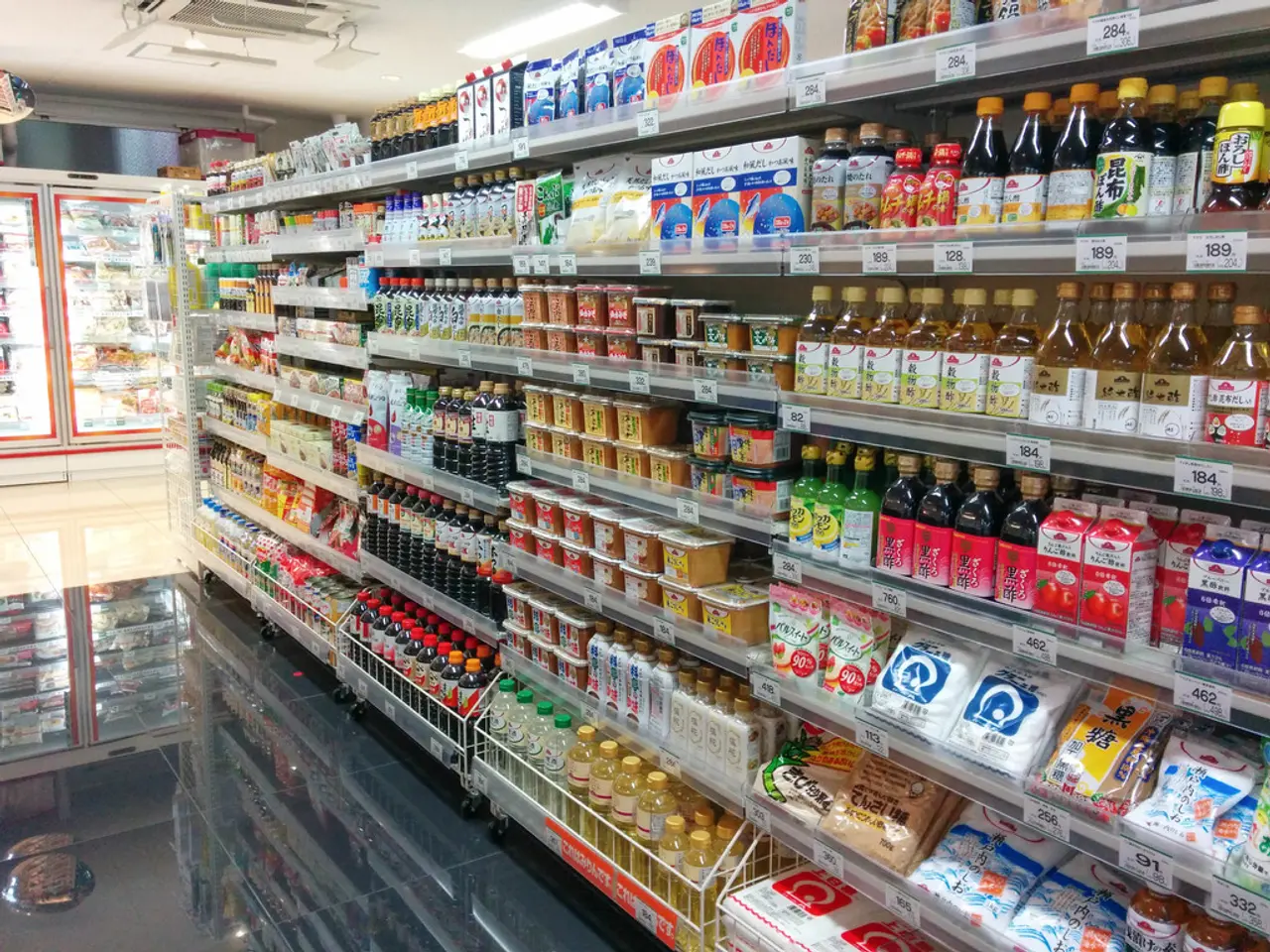
The ongoing trade war initiated by Trump poses a significant hurdle for the 97-year-old Asian market based in Seattle.
Uwajimaya, the beloved Seattle-based Asian grocer, is facing increased costs due to US President Donald Trump's tariff and trade policies, leading to higher prices for customers.
Established in 1928, Uwajimaya specialises in Asian goods and has been a staple in the community for nearly a century. However, recent economic challenges have put a strain on the store's prices.
The economic uncertainty caused by Trump's rapidly shifting approach to tariffs and trade deals is causing strain for Uwajimaya. Distributors are increasing their prices to the grocer, particularly due to tariffs on imports, especially from Asia - Uwajimaya's key sourcing region. This has added to inflationary pressures within the Seattle area, where costs have risen about 2.7% year over year partly due to tariffs.
The Covid-19 pandemic has also strained the grocery industry's supply chain, causing Uwajimaya and other stores to raise prices. The US Bureau of Labor Statistics tracked an uptick in inflation in the Seattle-Tacoma-Bellevue area of Washington state last month, with regional costs jumping 2.7% year over year.
Denise Moriguchi, the president and CEO of Uwajimaya, acknowledged that with distributor and retail margins already tight, the additional costs from shifting tariffs cannot be fully absorbed and will be felt by consumers. This situation compounds other recent challenges such as inflation and supply chain disruptions from the COVID-19 pandemic, further squeezing prices at the store.
Despite these price increases, some loyal customers remain undeterred. Sara Louie, a Seattle resident, stated that prices are skyrocketing across industries. Yet, she and others continue to shop at Uwajimaya, recognising the broader inflation and supply chain issues affecting the grocery industry overall.
The store chain was temporarily closed during World War II due to the incarceration of its founders, Fujimatsu and Sadako Moriguchi, and their children. Since then, it has weathered many storms and continues to serve the Seattle community with its unique selection of Asian goods.
In conclusion, Trump's tariff policies have increased operating costs for Uwajimaya through higher distributor prices, resulting in higher retail prices that customers must bear, thereby adding to economic uncertainty and price pressures at this historic Asian grocery chain.
- Trump's tariff and trade policies have directly affected businesses like Uwajimaya, resulting in higher costs for distributors, which in turn lead to increased prices for customers.
- Politics and war-and-conflicts, including Trump's approach to tariffs and trade, have significant impacts on finance, as seen in the increased costs faced by businesses like Uwajimaya.
- The general news of Uwajimaya's pricing struggles, due in part to Trump's tariff policies, is indicative of the broader economic challenges and inflationary pressures affecting the wider grocery industry and community.






