
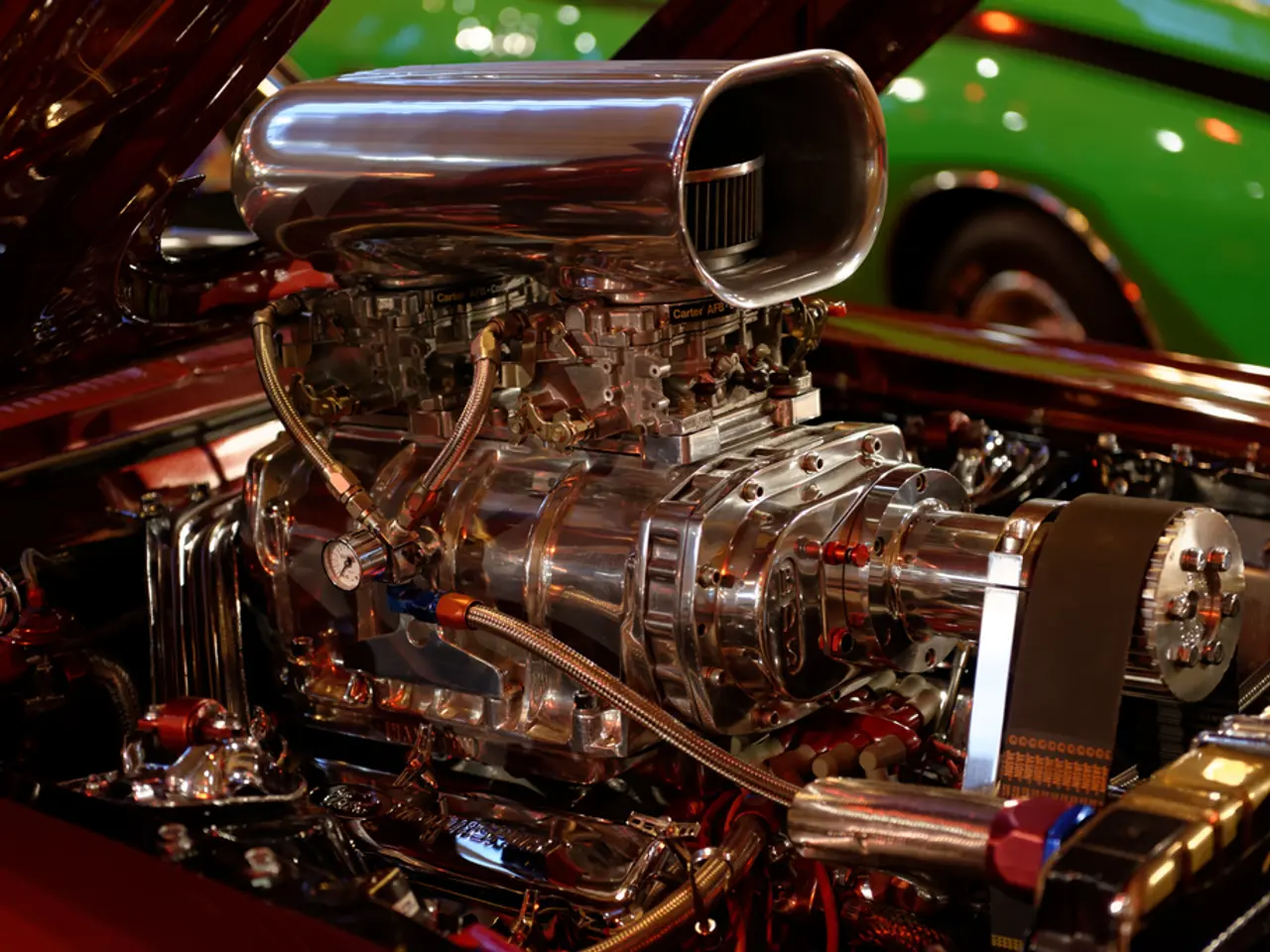
The Enduring Respect for the 426 Wedge Remains Justified
The 1960s were a golden era for Chrysler's high-performance V8 engines, and at the forefront was the 426 Wedge. This engine, part of the B series "wedge" engines, served as Chrysler's primary performance engine before the introduction of the legendary 426 Hemi.
Named for their wedge-shaped combustion chambers, the 426 Wedge engines differentiated themselves from the hemispherical combustion chambers of the 426 Hemi engines. In 1963, Chrysler developed the 426 Wedge for NASCAR and NHRA competition, marking a significant step in Chrysler's high-performance story.
The 426 Wedge was a torque-rich big-block that powered some of Mopar's earliest drag strip dominance. Race-focused versions like the Max Wedge, introduced before the end of the 1963 model year, featured improved combustion chamber design and camshafts. The Max Wedge engines were purpose-built for drag racing and high-performance street use, with the final performance variant being the 1964 Stage III Max Wedge. Despite improvements, the factory advertised power rating remained the same across these versions.
The 426 Street Wedge, a related but less extreme version, was offered in 1964 and 1965, mainly in Plymouth and Dodge B-body cars and light-duty Dodge trucks. The 426 Max Wedge, on the other hand, was a drag strip weapon in the early '60s, making its mark in NHRA Super Stock.
The 426 Max Wedge weighed approximately 700 pounds, designed to withstand heavy abuse. It could be easily modified with better camshafts, headers, and tuning. Real Max Wedge cars at shows are worth a closer look, as they might not have the same name recognition as HEMI cars, but they were fast, mean, and serious about performance.
The 426 Max Wedge was factory-rated at up to 415 horsepower and 470 lb-ft of torque. It came factory-equipped with dual Carter AFB 4-barrel carburetors on a cross-ram intake manifold. Surviving Max Wedge cars are rare and sought after by collectors who appreciate their role in Mopar's racing history.
The 426 Wedge's significance lies in its role as Chrysler’s primary performance thrust in the early 1960s and as the predecessor to the iconic 426 Hemi. It was capable of surviving high revs, big compression, and long pulls down the quarter-mile. The development of the 426 Wedge helped Chrysler refine its RB engine platform, influencing later designs like the 440 Magnum.
Moreover, the 426 Wedge helped pave the way for later Mopar muscle cars like the Charger and GTX to become performance legends. The 426 Wedge was especially effective in heavier B-body cars due to its off-the-line grunt. Its simpler design for its heads compared to the hemispherical heads was easier to machine and assemble.
In conclusion, the 426 Wedge represents an important phase in Chrysler’s muscle car and drag racing legacy. Some figures in the era doubted the competitiveness of the 426 Wedge in racing arenas, arguing that Chrysler needed to focus on resurrecting the 426 Hemi instead. However, the 426 Wedge's impact on Chrysler's high-performance V8 engines cannot be understated. It set the stage for Chrysler's later high-performance V8 engines, including the legendary 426 Hemi, which eventually replaced the Wedge as the pinnacle of Chrysler performance.
- The 426 Wedge engines' development in 1963 marked a significant milestone in Chrysler's high-performance story, setting the stage for their dominance in both NASCAR and NHRA competitions.
- In addition to its racing achievements, the 426 Max Wedge was an essential component of Mopar's earliest drag strip dominance, particularly in NHRA Super Stock events.
- The 426 Max Wedge engine's simplicity in head design compared to the hemispherical heads made it easier to machine and assemble, contributing to Chrysler's success in the automotive industry.
- As Chrysler's primary performance engine before the introduction of the 426 Hemi, the 426 Wedge paved the way for later Mopar muscle cars like the Charger and GTX, establishing a legacy in the transportation industry.
- Despite not receiving the same recognition as the iconic 426 Hemi, the 426 Max Wedge remains a coveted collectible among enthusiasts of American football (NFL and NFL) culture, sports cars, and lifestyle.






