
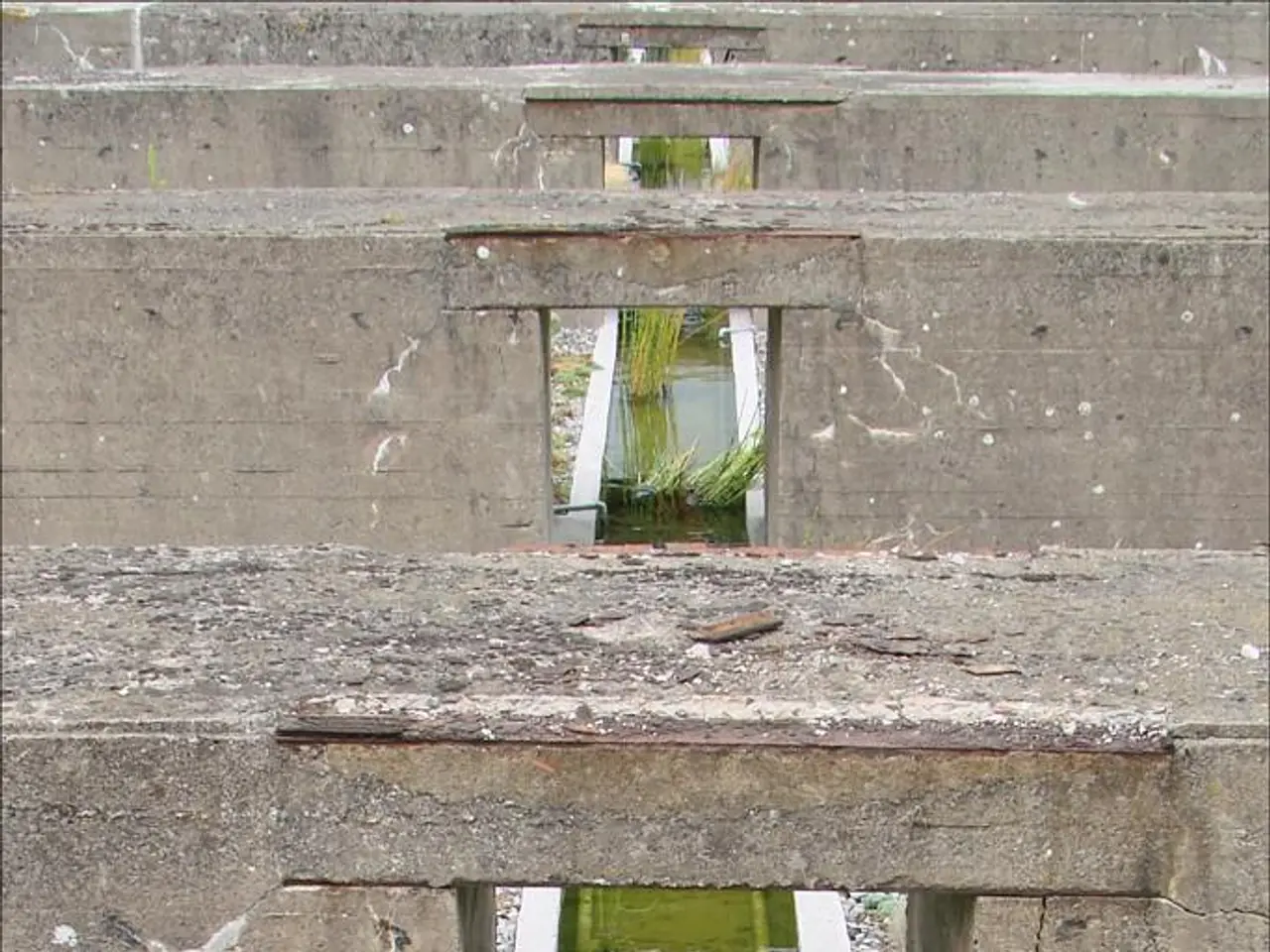
Struggle in reviving transplanted plant life
In a significant move towards environmental rehabilitation and regional development, plans are underway to transport Rhine water to the Garzweiler open-pit mine, west of Grevenbroich. This decision comes as part of a broader strategy to fill the Garzweiler, Inden, and Hambach open-pit mines with water once mining activities cease.
The use of Rhine water is crucial for the preservation of protected wetland areas in the Schwalm-Nette nature park. The Garzweiler Land Follow-up Association, comprising Mönchengladbach, Erkelenz, Grevenbroich, Jüchen, and Titz, has emphasised the need for constructive collaboration in the project's planning process.
The goal is to achieve a balanced groundwater balance within decades by using Rhine water to fill the open-pit lake. To achieve this, an enlargement of the pipeline and an additional section of the transport pipeline to Elsdorf are necessary for the Hambach open-pit mine.
The creation of these open-pit lakes is expected to enrich the landscape in the region, potentially supporting biodiversity and improving local environmental conditions. Simultaneously, economic benefits could arise from tourism and new industries related to the lakes, enhancing the local economy and providing new recreational opportunities.
However, concerns have been raised about the potential impact on the Rhine water transport pipeline and local hydrology. While the specific impacts are not well-documented, major water transport infrastructure is typically well-engineered to handle such changes. Nevertheless, it is crucial to ensure the pipeline is adequately dimensioned to manage large amounts of water, especially during high Rhine water levels, due to climate change risks.
The Garzweiler Land Follow-up Association has released a position paper stating these requirements. The Association also emphasises the need for swift planning and approval procedures due to the accelerated coal phase-out. The open-pit mine has negatively impacted numerous cities and municipalities in the Rhine region for decades, supporting power generation and economic growth in the Rhine-Ruhr area.
After the cessation of open-pit mining operations, the rehabilitation and water management objectives outlined in the brown coal plans must be met, and new post-use perspectives must be created. The transformation of the Garzweiler open-pit mine, along with Inden and Hambach, into open-pit lakes is inevitable.
In 2019, the brown coal committee of the Cologne regional government decided that the route of the planned transport pipeline should run from the Rhine water intake point at Dormagen via Rommerskirchen to the Garzweiler open-pit mine west of Grevenbroich. The diversion of the Rur river is not possible, and only Rhine water can guarantee a sustainable filling of the open-pit lake with stable slopes and good water quality.
As the project progresses, it is essential to prioritise environmental conservation, sustainable development, and the safety of the Rhine water transport pipeline. The rehabilitation efforts aim to restore ecological balance and create new habitats, while the creation of lakes from former mines could support tourism and economic development in the region. Socially, these changes might improve the quality of life for local residents and attract new inhabitants.
Overall, the plan to fill the mines with water is a significant step towards environmental rehabilitation and regional redevelopment, ensuring a balanced future for the Rhine region.
- The use of Rhine water, a crucial resource in environmental-science, is key to preserving protected wetland areas and achieving a balanced groundwater balance within the Schwalm-Nette nature park by filling the open-pit lakes, like the one in Garzweiler.
- As the plan progresses, finance will be crucial in the expansion of pipelines, such as the one in Elsdorf, to transport Rhine water to the mines, as economic benefits could arise from new industries, tourism, and improved environmental conditions.
- However, the potential impact on the Rhine water transport pipeline and local hydrology must be addressed, especially considering climate-change risks and the need for an adequately dimensioned pipeline to manage large amounts of water.






