
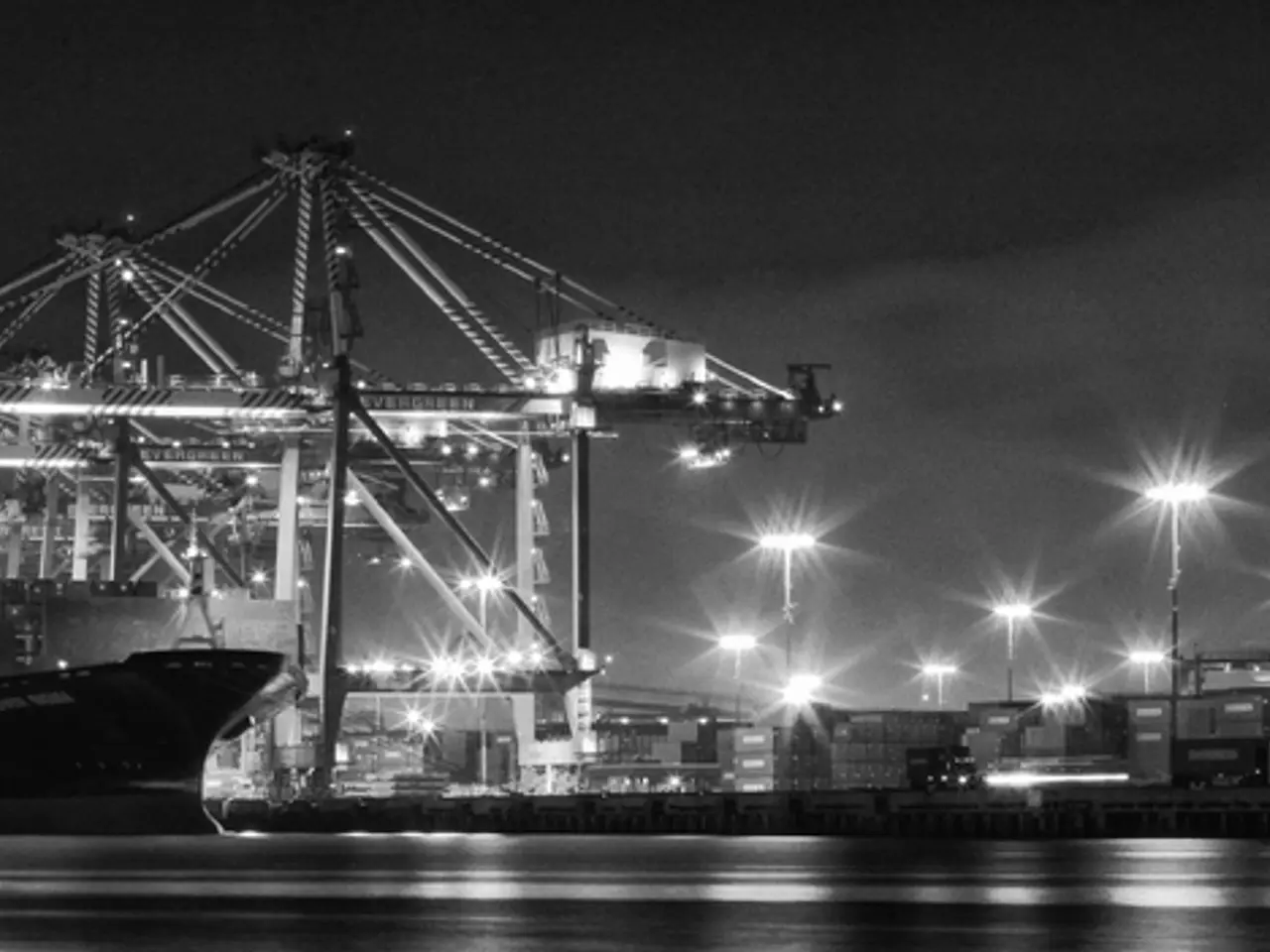
Strike causes substantial disruption to NOK's operations -Alert issued
The ongoing strike by union ver.di in the lock chambers of the Nord-Ostsee-Kanal (NOK) in Brunsbüttel and Kiel has caused a significant disruption to shipping traffic. The management of the canal is working to minimize the impact, but the backlog of ships waiting to use the heavily trafficked waterway is growing.
The strike aims to put pressure on the federal government due to potential savings on canal tolls. However, the exact financial impact of the strike on the union is uncertain. The federal government has not been directly involved in the negotiations between the union and the management of the canal.
The strike has led to a potential increase in environmental damage due to the longer routes ships are forced to take. These longer routes result in higher costs for shipping companies and increased fuel consumption and emissions. The incident of the vessel ECO LEVANT grounding in the Kiel Canal in January 2025 demonstrates the risks of navigation in the canal under disruption. Such events can force ships to reroute or wait, increasing congestion and the possibility of accidents or pollution in sensitive areas.
While no direct environmental damage from the strike itself is mentioned, canal strikes and their aftermath typically disrupt shipping routes, increase the risk of groundings or collisions, and potentially raise pollution risks during accidents or salvage operations, especially in ecologically sensitive areas like the Kiel Canal and nearby estuaries.
The incident of the vessel Robijn grounding near Bruinisse in the Oosterschelde estuary highlights the ecological sensitivity of shipping in these waters and the need for careful management to avoid pollution during recovery operations.
The strike has caused prolonged shipping delays and rerouted traffic along the Baltic and North Sea connection corridor. This increased environmental pressure on alternative routes and port areas. Heightened vigilance and potentially stricter regulations by companies and authorities are needed to mitigate ecological impacts associated with navigation disruptions.
The potential economic impacts on shipping companies may influence investments in safer, more environmentally friendly technologies or alternative transportation modes. However, the union expects significant revenue losses, but the exact amount is difficult to estimate.
Jens Knudsen of the Initiative Kiel-Canal criticizes the strike, stating it threatens the attractiveness of the canal. The Initiative Kiel-Canal has expressed concern that the strike could harm the attractiveness of the canal for shipping companies.
The strike has been ongoing for several days, and no clear timeline for when it might end has been provided by the union. The shipping companies affected by the strike are facing increased costs due to the longer routes they are forced to take. The federal government has not yet commented on any potential financial benefits from the avoided canal tolls during the strike.
- The union's strike on the Nord-Ostsee-Kanal (NOK) has extended to the public-transit sector, as many shuttle services for workers commuting to and from the canal have been disrupted, causing additional difficulties for the management and workers involved.
- The prolonged strike on the canal has prompted a reassessment in the industry and finance sectors, with shipping companies considering investments in alternatives such as rail transportation or alternative routes to avoid potential disruptions in the future.






