
Revised Terminal at Long Beach Reduces Pollutants, Aims for Net-Zero Emission Status
Long Beach Container Terminal Achieves Significant Greenhouse Gas Emissions Reduction
The Long Beach Container Terminal (LBCT) is making strides in its ambitious goal to achieve net-zero emissions by 2030. This ambitious plan, part of a $2.5 billion, 15-year zero-emission conversion, has seen a reduction in greenhouse gas emissions by an impressive 86%.
LBCT's commitment to a greener future is evident in its various initiatives. The terminal utilizes onshore power for docked ships, integrates cleaner, greener vessels into its operations, and is constructing a second battery charging and exchange facility. Key updates in the report include the deployment of additional electric ship-to-shore and rail cranes.
The terminal's CEO, Anthony Otto, stated that LBCT's clean-energy initiatives enable it to meet or exceed emission regulations while maintaining efficiency. LBCT's progress has been recognized globally, earning it a 96% rating from GRESB, a leading ESG benchmarking organization, placing it first among peer container ports worldwide.
Transitioning to zero-emission equipment and fuels is a significant part of LBCT's strategy. The terminal is part of a broader port initiative emphasizing the adoption of zero-emission ships, vehicles, and cargo-handling equipment by 2030. Some vessels and terminal operations are already moving toward methane-based renewable fuels starting as early as 2024.
LBCT's sustainability efforts extend beyond its operations. The terminal has quadrupled its cargo-handling capacity while reducing emissions. It also invests in job training programs for local youth and supports underserved communities.
The terminal's CEO, Anthony Otto, emphasized the importance of human-operated and American-manufactured zero-emission equipment, as stated by Tommy Faavae, Business Development Manager at IBEW Local 11.
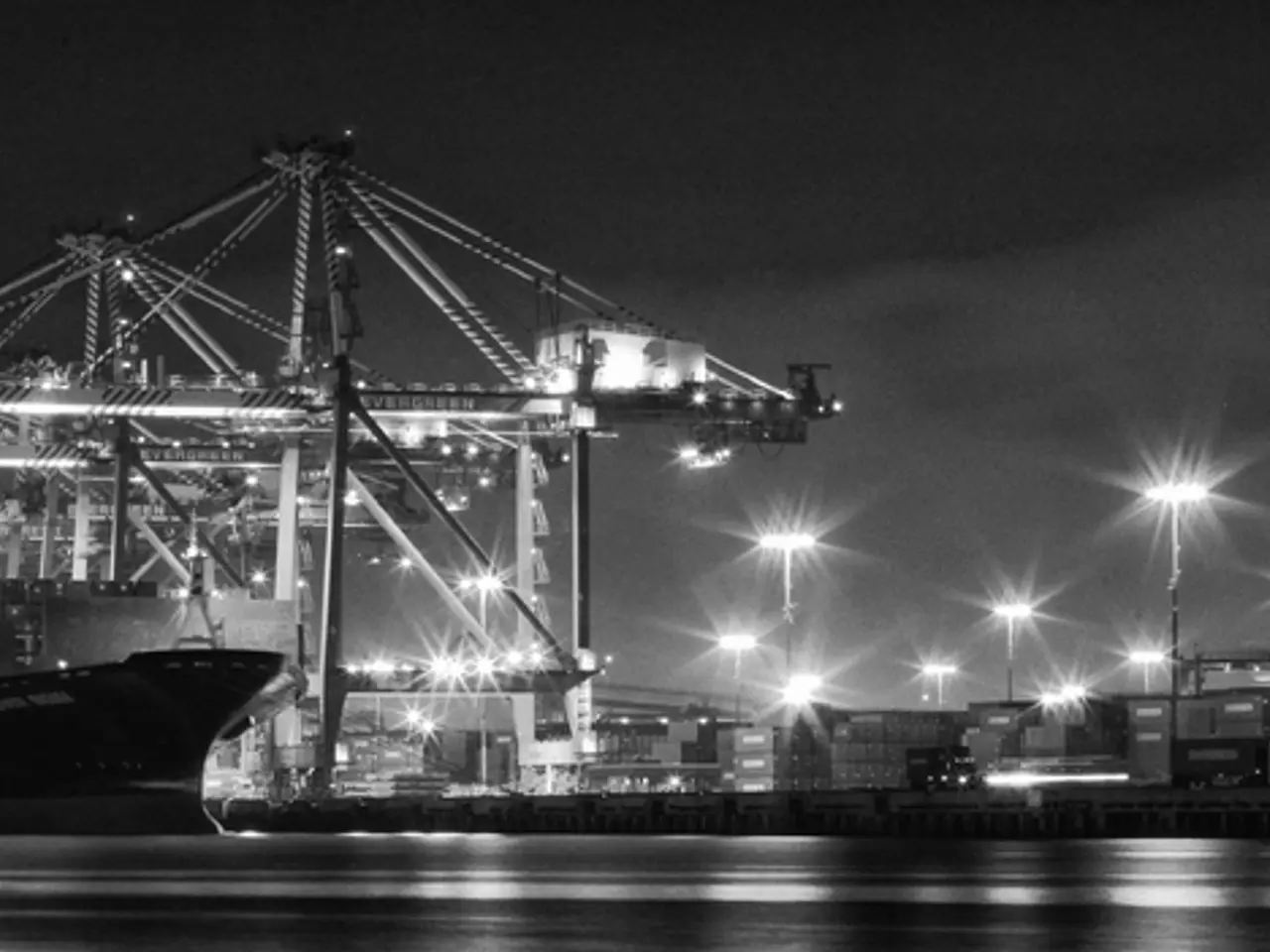
For more details on LBCT's Net Zero Action Plan and progress reports, visit the "About Us/Corporate Messages" section on LBCT's website. These advancements further underscore LBCT's role as a global leader in sustainable maritime operations. The terminal operates the state-of-the-art Middle Harbor Terminal facility, featuring the deepest dockside on the U.S. Pacific Coast and an electrified fleet of cranes and vehicles.
LBCT's 2024 Net Zero Progress Report highlights advancements in clean energy adoption, infrastructure upgrades, and community investment. The report reaffirms LBCT's commitment to achieving net-zero emissions by 2030 and its role as a model for clean terminal operations, as stated by Joe Lyou, CEO of the Coalition for Clean Air. LBCT is collaborating with the Port of Long Beach to advance the Clean Air Action Plan and inspire industry-wide decarbonization.
- LBCT's significant reduction of 86% in greenhouse gas emissions demonstrates progress in the science of environmental-science as it relates to climate-change.
- The utilization of cleaner, greener vessels, onshore power for docked ships, and the construction of a battery charging and exchange facility are examples of how the terminal's operations align with the industry's increasing focus on energy efficiency and sustainable business practices.
- LBCT's deployment of additional electric ship-to-shore and rail cranes, investment in job training programs, and collaboration with the Port of Long Beach on the Clean Air Action Plan is a testament to the terminal's commitment to finance and invest in a greener future.






