
Researchers rejuvenate antiquated high-pressure method for soil restoration and reducing CO2 emissions
In a groundbreaking development, German startup Humify has created a unique solution to combat climate change and soil degradation. The company's innovative product, Superhumus, is transforming the way we approach soil regeneration and carbon capture.
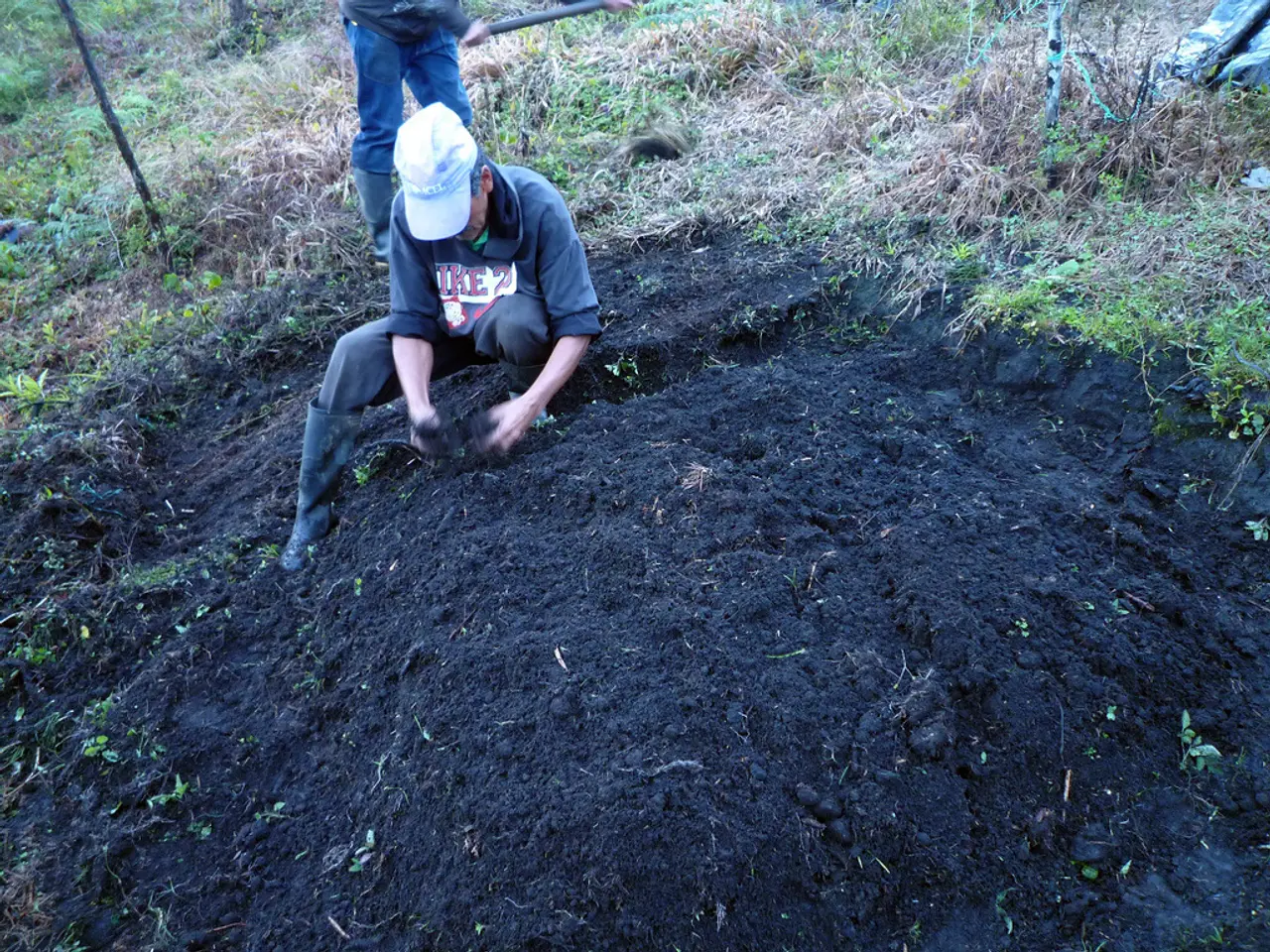
Humify's Superhumus is a nutrient-rich, black sludge-like compound, produced through hydrothermal humification. This process converts organic waste into artificial humic substances at around 200 degrees Celsius with some pressure and water. When added to soil, Superhumus retains moisture and valuable minerals, fostering a rich ecosystem that attracts beneficial microorganisms.
These microbes, in turn, enhance nutrient availability for plants and capture carbon dioxide in the soil, effectively turning the soil into a carbon sink. This accelerates soil regeneration that would otherwise take thousands of years while simultaneously helping to combat climate change by sequestering significant amounts of CO2[1][2][3][4].
The process behind Superhumus is a repurposed version of the century-old Bergius-Pier process, originally designed to convert biomass into oil. Markus Antonietti, PhD, Director at the Max Planck Institute of Colloids and Interfaces, repurposed this process to restore soil health and trap carbon in the ground[1][2].
Unlike many other carbon capture technologies, Humify's flexible process works with various types of organic waste and adapts to local conditions. This makes it a scalable, cost-effective solution for restoring degraded soils and enhancing agricultural productivity[2][3][4].
Humify is now planning to scale production, with designs for a pilot plant capable of processing 3,000 tonnes of biomass annually. The company's co-founder and CFO, Harald Pinger, stated that Humify's Superhumus is an example of how science and business can work together for sustainable impact[5].
In Chinese field trials, Humify's Superhumus has shown impressive results, increasing crop yields by up to 20 per cent[6]. As we continue to grapple with the challenges of climate change and food security, Humify's Superhumus offers a promising solution that could revolutionize the way we approach these global issues.
Sources: [1] Bergius-Pier Process Repurposed for Soil Regeneration and Carbon Capture - Science Daily [2] Humify's Superhumus: A Revolutionary Solution for Soil Degradation and Climate Change - Forbes [3] Carbon Capture with Humic Substances: A New Approach for Soil Regeneration - Journal of Soil Science and Plant Nutrition [4] Humify's Superhumus: A Game Changer for Agriculture and the Environment - GreenBiz [5] Humify: Combining Science and Business for Sustainable Impact - Sustainability Times [6] Humify's Superhumus Boosts Crop Yields in Chinese Field Trials - Agri-Pulse
- The innovation, Superhumus, developed by German startup Humify, is a nutrient-rich compound created through hydrothermal humification, which not only fosters a rich ecosystem in the soil but also capture carbon dioxide, effectively turning soil into a carbon sink, contributing to combating climate change.
- The science behind Superhumus is a repurposed version of the century-old Bergius-Pier process, originally designed to convert biomass into oil, but now used to restore soil health and trap carbon in the ground.
- Humify's Superhumus, a flexible process that works with various types of organic waste and adapts to local conditions, is a scalable, cost-effective solution for restoring degraded soils and enhancing agricultural productivity, with potential to revolutionize the industry.
- As the company plans to scale production, Humify's Superhumus, seen as an example of science and business working together for sustainable impact, offers a promising solution in the face of global challenges such as climate change and food security, particularly in Chinese field trials where it has shown impressive results in increasing crop yields by up to 20%.






