
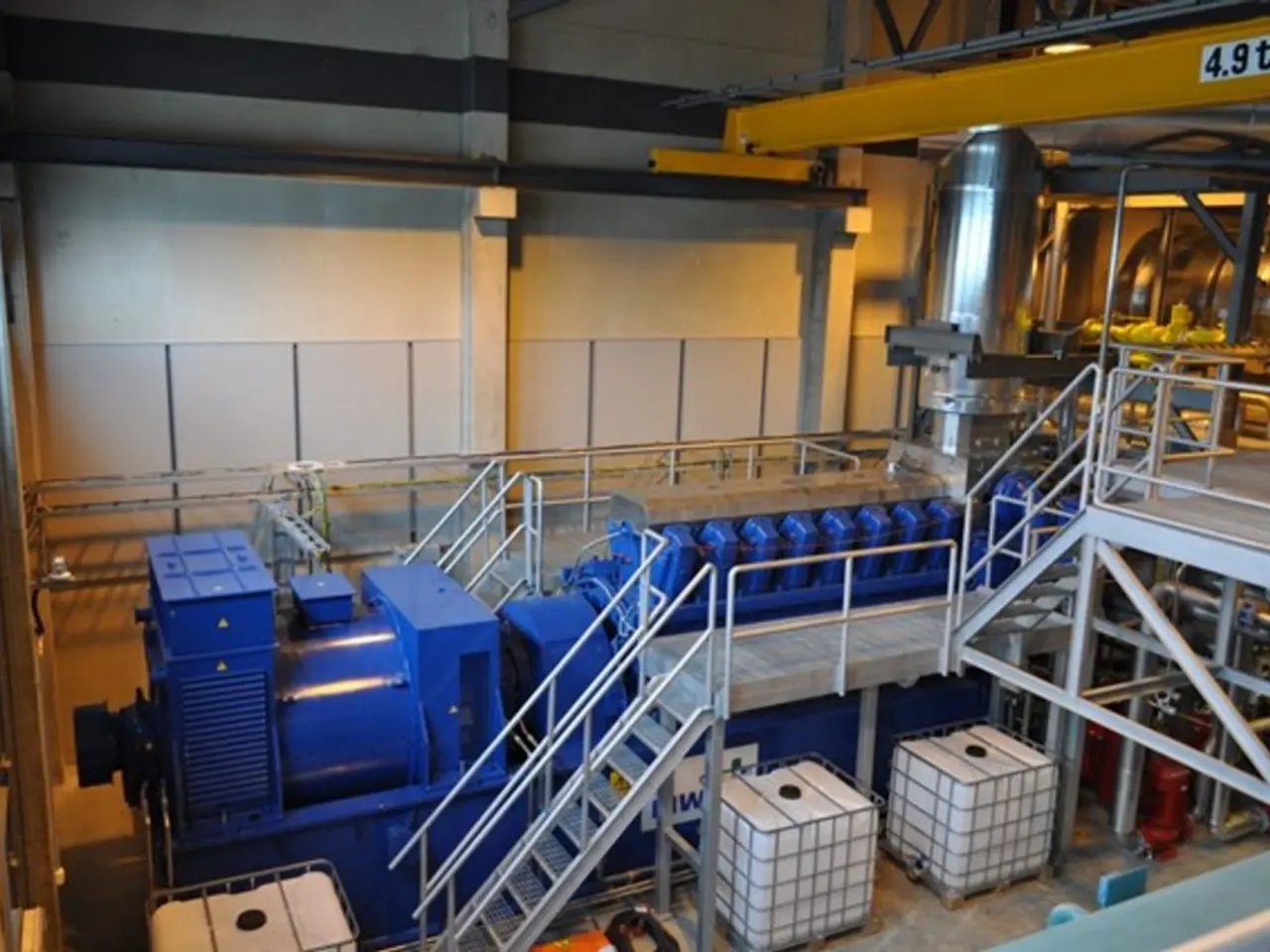
Regional businesses face uncertainties due to recent changes in American trade policy and the implementation of new customs agreements.
Impact of U.S. Trade Policy on European Businesses
The current U.S. trade policy is causing significant challenges for European businesses, particularly in sectors like machinery, metal, and wholesale trade. A recent flash survey, conducted across more than 3,500 companies nationwide, has revealed that three-quarters of the companies are experiencing economic burden due to the policy.
The regional economy is strongly integrated into global value chains, as shown by the survey results. To absorb additional costs, 86% of companies pass at least some of these costs on to their U.S. customers, further heating up U.S. inflation.
The survey also found that half of the companies are indirectly affected by the current U.S. trade policy, through customers or suppliers. Among companies with U.S. business, over three-quarters of respondents feel burdened by the current EU-USA trade deal.
Companies cite trade policy uncertainties and concerns about new tariffs as their biggest burden. Trade policy uncertainties are causing businesses to rethink their market strategies. Nearly 30% of companies with U.S. business are delaying or freezing investments.
The machinery industry, metal industry, and wholesale trade are particularly affected by the current U.S. trade policy. These sectors face some of the highest exposure to tariffs, alongside automotive and chemicals, impacting transatlantic supply chains and competitiveness.
The period of tariff threats created significant uncertainty, deterring private investment decisions in export-focused industries. While the new deal reduces some uncertainties, concerns remain about the long-term stability and the impact on EU competitiveness, potentially causing cautious investment behavior in the machinery and metal sectors.
The current impact of U.S. trade policy on European businesses is characterized by increased tariff uncertainty and elevated costs, which are influencing investment decisions negatively. Following a turbulent period of tariff threats and pauses, a recent U.S.-EU trade deal has set a 15% tariff ceiling on most EU exports to the U.S., down from an earlier threatened 30%.
Wulf-Christian Ehrich, President of the Industry and Commerce Chamber of Dortmund, explains that the feedback from businesses is clear: they need reliable trade relations. Heinz-Herbert Dustmann, President of the Industry and Commerce Chamber of Dortmund, echoes this sentiment, stating that the EU-USA deal in its current form is more of a burden than a relief for most companies.
The latest EU-USA trade deal is not bringing any relief: Only 5% of the surveyed businesses expect positive effects, while the majority find it a burden. The Chamber of Industry and Commerce of Dortmund calls for stability and reliability in the transatlantic partnership.
It's currently difficult to predict whether and to what extent announced trade agreements will hold. These companies are also concerned about the current U.S. base tariff of 10% set to increase to 15%. The surveyed companies believe that the EU-USA trade deal does not bring relief from the negative impacts of the current U.S. trade policy.
In sum, the machinery, metal, and wholesale trade industries in Europe face higher U.S. tariffs (now capped at 15%) and ongoing policy uncertainties that disrupt supply chains and add export costs, making investment decisions more cautious. The recent trade deal reduces the risk of even steeper tariffs but does not eliminate challenges, particularly for sectors with high exposure to U.S. tariff policies.
The current U.S. trade policy, with a 15% tariff cap on most EU exports to the U.S., continues to pose burdens for European businesses, especially in sectors such as the machinery, metal, and wholesale trade industries. Uncertainties surrounding ongoing trade policy and potential increases in tariffs compel businesses to rethink their investment strategies, causing a more cautious approach in these sectors.






