
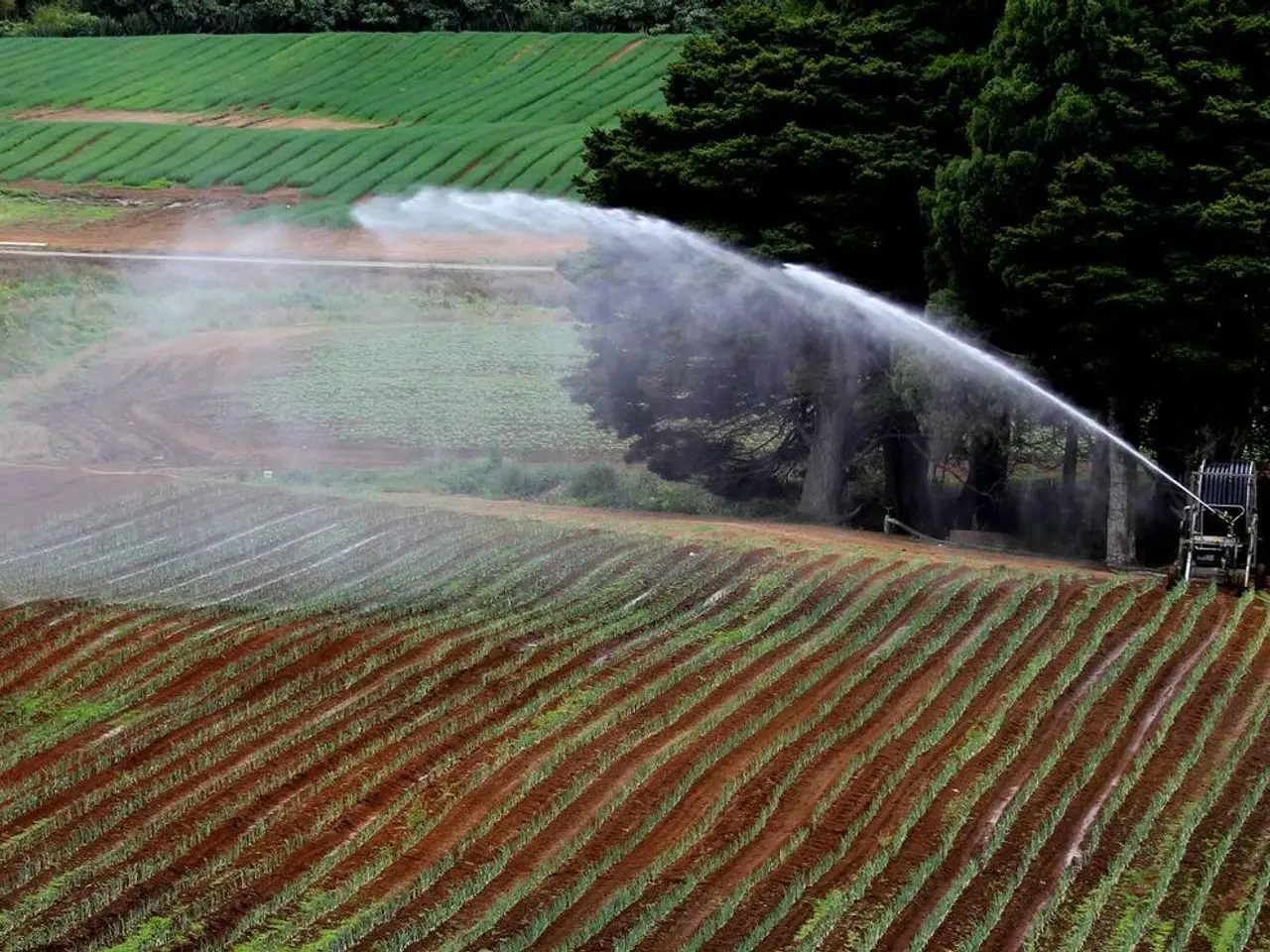
Practices Developed for Saving Energy in Permaculture Agriculture
In an effort to combat climate change and reduce reliance on fossil fuels, energy-efficient farming practices are gaining traction worldwide. These practices not only help overcome financial hurdles but also speed up the transition to sustainable farming.
Success in Energy-Efficient Farming
La Ferme du Bec Hellouin in France, for instance, produces ten times more than big organic farms, demonstrating the success of energy-efficient farming. The farm's success can be attributed to precision farming, smart farming, and AgTech, which help farmers make better decisions based on data and reduce waste.
Technological Advancements
Technological advancements are revolutionizing farming, with innovations like wind power and biofuels like biodiesel and ethanol becoming more popular. Wind turbines on farms can potentially earn farmers up to $5,000 a year per turbine, while biofuels can help farmers save money.
Education and Training
Education and training for farmers are key in learning about energy-saving farming methods. Workshops, online courses, and hands-on training provide the skills farmers need to implement these practices.
Energy-Saving Techniques in Permaculture Farming
Common energy-saving techniques in energy-efficient permaculture farming include:
- Agroforestry: Integrating trees, shrubs, crops, and livestock in the same area improves soil fertility, microclimate stability, and water retention, reducing the need for external inputs like irrigation and fertilizers.
- Crop rotation and companion planting: Alternating plant families and interplanting compatible species enhance nutrient cycling, reduce pest pressures, and build soil health naturally, lowering energy needs for fertilizers and pest control.
- Low-impact tillage: Using shallow tillage with specialized equipment minimizes soil disruption and fuel use compared to conventional tilling methods.
- Use of animals in rotational grazing systems: Moving chickens between garden areas aids soil fertilization, weeding, and tilling naturally, reducing mechanical labor and fuel use.
- Water management and microclimate design: Permaculture farms emphasize water retention techniques and creating stable microclimates via vegetation layers, which decrease irrigation demands.
- Maximizing spatial efficiency: Designing dense, layered food systems such as vertical gardens, rooftop planters, and food forests maximize production in small areas, reducing land and energy footprints associated with transport and processing.
- Integration of renewable energy and precision tech: Using solar panels and technologies like drones or AI for precision farming optimizes resource use and reduces waste and external energy inputs.
- Soil maintenance with compost teas, bio-fertilizers, and cover crops: Promotes soil carbon and fertility, reducing the need for synthetic fertilizers which are energy-intensive to produce.
These techniques collectively create resilient, low-energy-input farming systems that minimize reliance on fossil fuels, decrease emissions, and restore ecological balance characteristic of permaculture design.
Sustainable Livestock Management
Sustainable livestock management practices like rotational grazing and silvopasture help farmers use land well, improve soil health, and cut down on external inputs.
Water Conservation Strategies
Sustainable water conservation strategies include drip irrigation, improving soil health, and cover cropping. These strategies can significantly reduce water usage and energy consumption.
Supportive Policies and Incentives
Supportive policies and incentives can help boost energy efficiency and cut greenhouse gas emissions in farming. Governments can offer subsidies for renewable energy, grants for water conservation, and tax breaks for sustainable farming.
Community Involvement
Community involvement in energy efficiency is crucial in promoting sustainable farming. CSA programs, farmer's markets, and educational programs help spread knowledge about green farming and encourage better food choices.
In conclusion, energy-efficient farming offers many advantages, such as saving money, using resources wisely, and protecting the environment. By adopting these practices, farmers can create self-sustaining systems that work like nature, contributing to a greener and more sustainable future.
- La Ferme du Bec Hellouin's success in producing ten times more than big organic farms is largely due to the adoption of energy-efficient farming practices like precision farming, smart farming, and AgTech.
- Wind turbines on farms can potentially earn farmers up to $5,000 a year per turbine, making wind power a popular innovation in energy-efficient farming.
- Education and training for farmers are key in learning about energy-saving farming methods, with workshops, online courses, and hands-on training providing the necessary skills.
- permaculture farming employs various energy-saving techniques, such as agroforestry, crop rotation, low-impact tillage, and water management, to build self-sustaining systems that minimize reliance on fossil fuels.
- Sustainable livestock management practices like rotational grazing and silvopasture help farmers use land effectively, improve soil health, and reduce external inputs.
- Sustainable water conservation strategies like drip irrigation, improving soil health, and cover cropping can significantly reduce water usage and energy consumption in farming.
- Supportive policies and incentives, such as subsidies for renewable energy, grants for water conservation, and tax breaks for sustainable farming, can help farming industries become more energy-efficient and reduce greenhouse gas emissions.
- Community involvement in energy efficiency extends to programs like CSA programs, farmers' markets, and educational programs that spread knowledge about green farming and encourage better food choices.
- Adopting energy-efficient farming practices not only saves farmers money and contributes to a greener future but also contributes to the industry's transition to sustainability and the science of environmental-science, and the financial stability of the industry in the face of renewable-energy and climate change challenges.






