
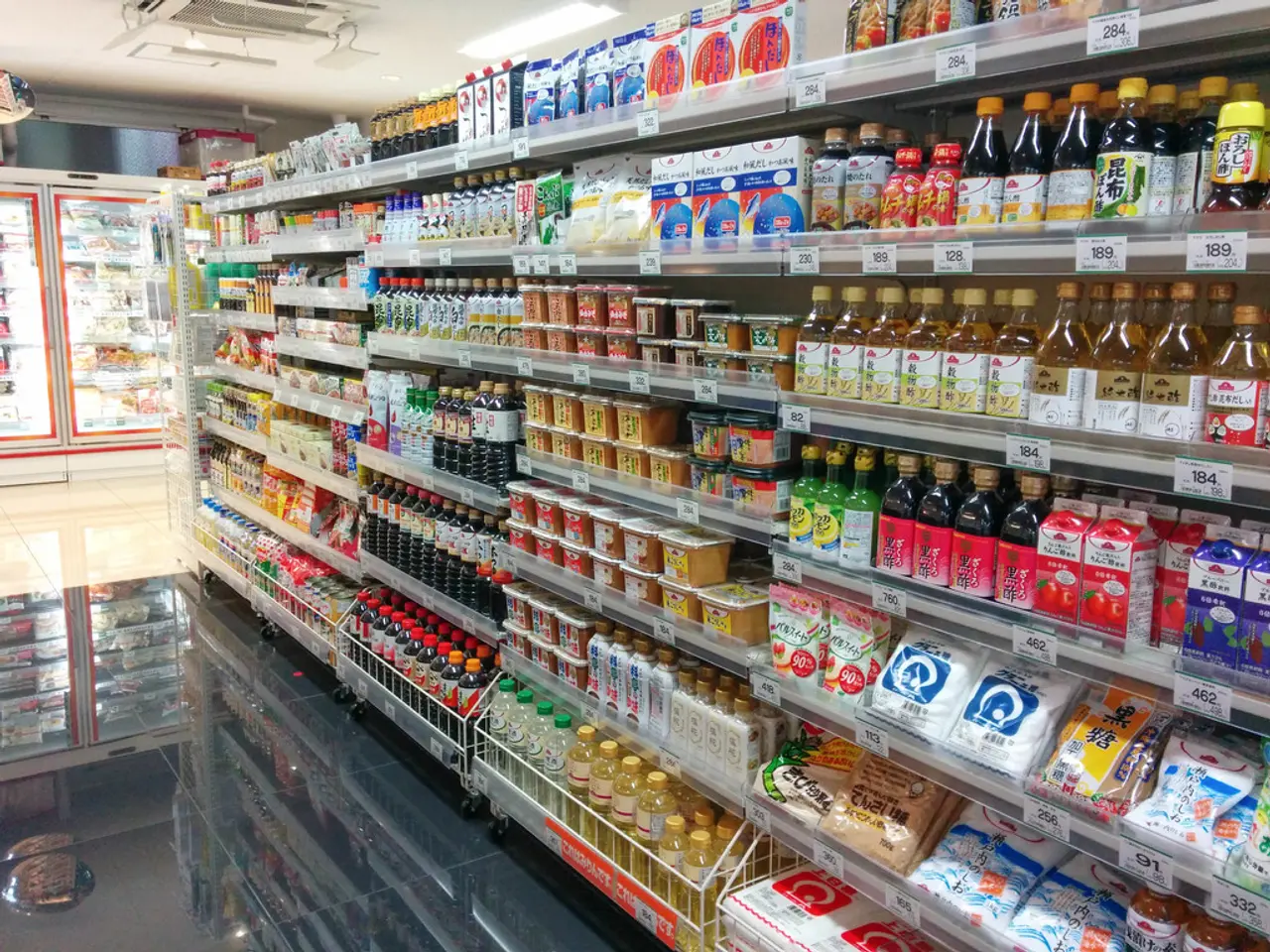
Governmental strategies for reducing inflation: a look at the implemented policies
In a bid to combat inflation and ensure affordability of essential goods, the Kazakhstan government has reinforced its Comprehensive Measures for Control and Reduction of Inflation. These measures, recently emphasized by Prime Minister Olzhas Bektenov, focus on price stabilization and involve a multi-strategy approach.
Key areas of the updated measures include boosting domestic production, enhancing predictability in tariff policy, stabilizing prices on essential goods, and reducing inflation expectations. The government is working tirelessly to saturate domestic markets with products, identify and limit unproductive intermediaries, use stabilization funds, forward contracts, subsidies, and ensure price stability.
To strengthen domestic supply, the government is expanding sown areas for priority crops intended for socially significant food products. This proactive stance aims to make such products more accessible and affordable by controlling inflation dynamics and improving domestic production capacity.
While the exact price changes of socially significant products post-measures are not quantified in the available data, these various mechanisms aimed at stabilizing the market and increasing supply indicate a commitment to addressing inflation impacts on essential goods.
Despite these government efforts, Kazakhstan experienced a relatively high inflation rate of 10.1% for the first five months of 2025, compared to 9.0% a year earlier, mainly driven by rising utility prices. This suggests that while control measures are in place, inflationary pressures remain significant, partly due to external factors and possibly ongoing shifts in critical sectors like energy.
Notably, Kazakhstan maintains competitive prices for Socially Significant Products (SSP) compared to the Eurasian Economic Union (EAEU) and Central Asia. For instance, potatoes, carrots, onions, and cabbage in Kazakhstan are 38%, 47%, 47%, and 50% cheaper respectively compared to the EAEU and Central Asia. Similarly, beef in Kazakhstan is 30% cheaper than in the EAEU and Central Asia.
In an effort to further stabilize prices, the government has signed contracts for the supply of 30,300 tons of early vegetables, and supplies have been organized from China, Pakistan, and Uzbekistan to stabilize prices during the off-season.
The updated Complex of Measures for Inflation Control and Reduction has been extended until 2026. The government, National Bank, and local executive bodies are working together to curb price increases, with penalties replacing warnings for exceeding the trade markup limit. Over 3,000 agricultural fairs have been held this year with prices below market levels.
Memorandums have been signed with industry unions, resulting in an 8.7% decrease in egg prices. Export restrictions have been imposed on potatoes, breeding stock, and young bulls to prevent unjustified increases in regulated utility tariffs.
In conclusion, Kazakhstan's government is actively addressing inflation through a comprehensive and proactive approach. The updated Complex of Measures for Inflation Control and Reduction highlights the government's commitment to addressing inflation impacts on essential goods, while maintaining competitive prices for Socially Significant Products compared to the EAEU and Central Asia. However, the ongoing challenges in fully curbing price rises, particularly in utilities and potentially other sectors, indicate that more work is needed to achieve the desired inflation rate reduction.
- To ease financial strains and maintain business sustainability, the Kazakhstan government's recent focus on stabilizing prices for essential goods is also crucial in the broader political landscape, as affordable food products are integral to social well-being and general-news discourse.
- As part of its strategic business planning, Kazakhstan's government likely considers the broader economic implications of inflation, including its impact on financial markets and the overall health of the nation's economy, in addition to the potential political ramifications of high inflation rates.






