
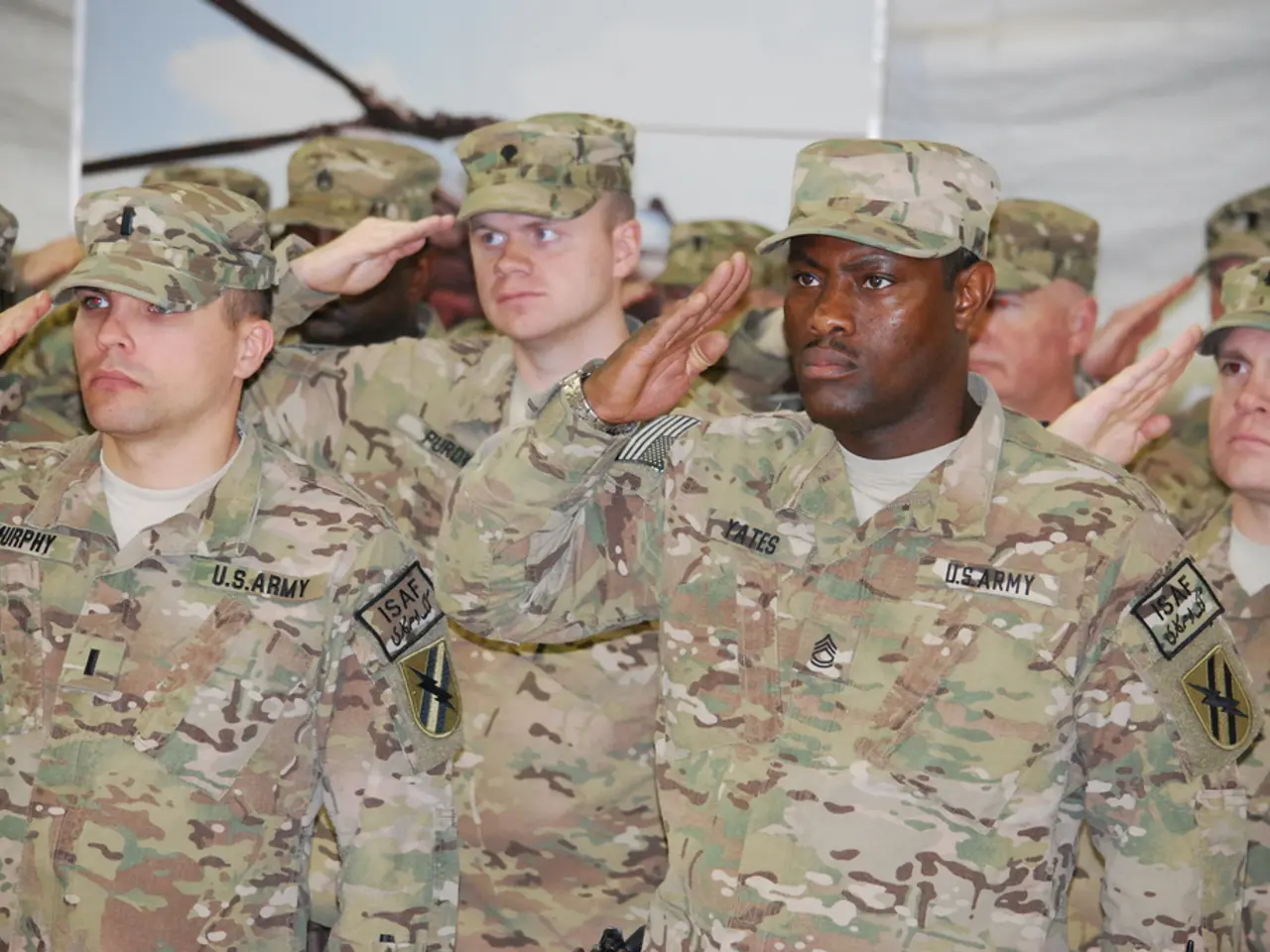
German armed forces, Bundeswehr, experiencing a historic peak in recruitment levels, despite recent changes to military service structure
Germany Sees Significant Increase in Bundeswehr Recruitment
Germany's military, the Bundeswehr, has experienced a notable surge in recruitment in 2022, with the number of consultations for joining the force increasing by 11% to 60,589. This rise has resulted in a total of 13,739 new recruits from January to July 22, marking a 28% increase compared to the same period last year [1][2].
The heightened security concerns following Russia's invasion of Ukraine have played a significant role in this trend. The geopolitical situation has prompted Germany to reassess its military readiness and capacity, leading to ambitious recruitment targets and potential structural changes in military service [2][4].
Germany has set a goal to recruit 40,000 new soldiers annually by 2031 to expand the Bundeswehr, which had shrunk slightly in prior years. To reach these targets, the government is increasing incentives for voluntary enlistment, including pay raises, subsidies for driving licenses, and signing bonuses [2][3].
Starting in 2027, young men and female volunteers will be required to complete questionnaires gauging their interest in military service, with health assessments to follow for promising candidates. This process began with 18-year-olds being asked about their interest and fitness in November 2024 [1][2].
The total number of voluntary conscripts has increased by 15% to 11,400 - the highest level in ten years. The increase was particularly high among enlisted personnel (38%) and non-commissioned officers (41%) [1]. The majority of the new recruits are voluntary conscripts.
The planned expansion includes creating 10,000 additional military and 2,000 civilian posts initially in 2026, with a longer-term goal of growing the Bundeswehr to over 202,000 military personnel and nearly 78,000 civilian employees by 2031. This represents a significant increase from the current force size of about 180,000 soldiers [1][2].
Although conscription was suspended in 2011, the Defense Ministry is considering reinstating a draft starting as early as 2028 if voluntary recruitment falls short of needs. However, there is political sensitivity around this issue: the Social Democratic Party (SPD) has stated it will only support draft options after exhausting all voluntary recruitment measures [2][4].
The reserve is expected to grow to 200,000, partly through more conscripts, due to tensions with Russia. The goal is to increase the number of military recruits to 25,000 per year with the new model. The total strength of the Bundeswehr, including professional soldiers, soldiers on contract, and voluntary conscripts, has increased by 1% to 183,000. The strength of the Bundeswehr is expected to increase to around 260,000 in the coming years [1][2].
In summary, the increase in recruits and consultations results from Germany’s response to the changing security environment in Europe, with comprehensive plans to strengthen the military both by boosting voluntary enlistment and potentially reintroducing conscription as a fallback. The government aims to transform the Bundeswehr into a more robust military force through expanded recruitment efforts, new incentives, and legal frameworks to support these changes [2][4].
[1] Bundeswehr increases its recruitment efforts in response to tensions with Russia. (2022, August 1). The Local. https://www.thelocal.de/20220801/bundeswehr-increases-its-recruitment-efforts-in-response-to-tensions-with-russia
[2] Germany plans to recruit 40,000 new soldiers annually by 2031. (2022, July 22). Deutsche Welle. https://www.dw.com/en/germany-plans-to-recruit-40000-new-soldiers-annually-by-2031/a-61747369
[3] Germany increases incentives for voluntary military service. (2022, January 27). Deutsche Welle. https://www.dw.com/en/germany-increases-incentives-for-voluntary-military-service/a-60464718
[4] Germany's defense minister wants to expand the Bundeswehr. (2022, February 2). Deutsche Welle. https://www.dw.com/en/germany%E2%80%99s-defense-minister-wants-to-expand-the-bundeswehr/a-61148523
- The surge in Bundeswehr recruitment can be attributed to the political and financial implications of the changing security environment, other factors being the geopolitical situation and the need to increase military readiness.
- The increased recruitment in the German military, coupled with potential structural changes, is closely intertwined with the dynamics of both domestic finance and international politics, especially in relation to Europe's security landscape and Germany's role within it.






