
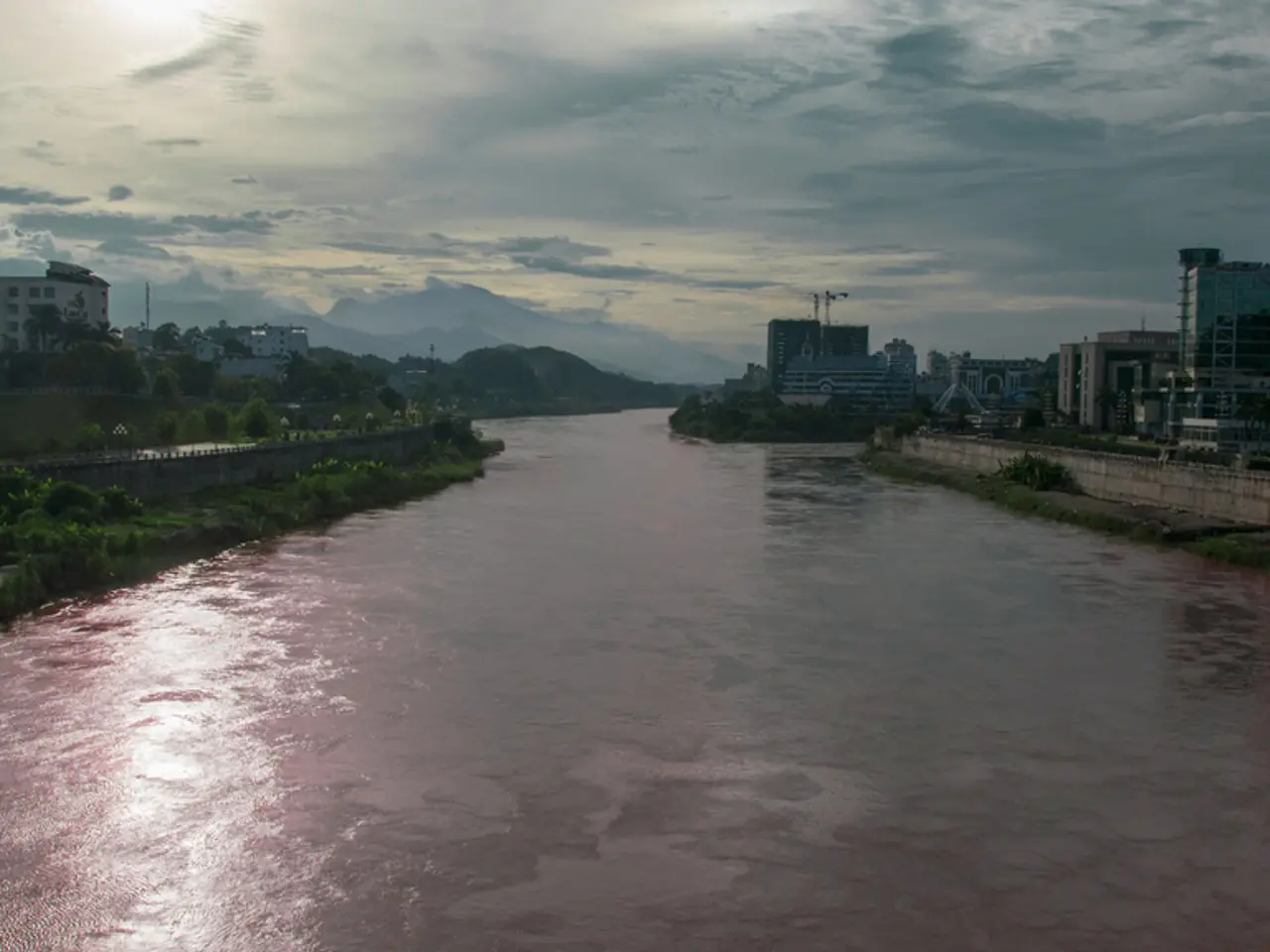
France's Rivers Warming Up Amid Heat Wave Resulting in Power Stations Shutting Down.
In the midst of a prolonged heatwave in France, several nuclear power plants have been forced to reduce their output or temporarily shut down due to concerns about the temperature and availability of cooling water.
The Golfech nuclear power station, owned by EDF, the state-owned utility, was one of the plants that shut down on Sunday evening. This decision was made to prevent the Garonne River's water temperature from exceeding safe operational limits for the plant's cooling system. The river was forecast to reach 28 degrees Celsius on Monday, a temperature that could have led to the release of excessively warm water back into the river, potentially impacting local ecosystems and breaching environmental regulations.
The Blayais nuclear power plant in west France also reduced its output on Sunday to prevent overheating of the Gironde estuary. Similarly, the Bugey nuclear plant in southern France was considering a shutdown due to concerns about overheating of the Rhône. However, as of the time of this news article, the Bugey nuclear plant had not been confirmed to have been shut down.
These measures are part of a broader response to the ongoing heatwave in France, which is expected to last until mid-week. Temperatures have soared above 40 degrees Celsius in parts of the country, making it challenging for the nuclear reactors to maintain their cooling capacity.
France normally generates over 70% of its electricity from nuclear power. However, the heatwave has caused reduced availability and output, creating a supply challenge. This has also contributed to power price volatility, with spikes observed in electricity prices during these disruptions.
EDF has not provided information on the duration of the Golfech nuclear power plant's shutdown or when it will resume operations. Similarly, no information was provided on the duration of the Blayais's reduced output or the potential shutdown of the Bugey nuclear power plant.
In summary, the heatwave in France is causing rivers to potentially overheat, necessitating measures to protect nuclear power plants. These plants, like the Golfech, rely on nearby rivers for cooling, and when river water temperatures rise too high or water levels drop, the plants must reduce output or temporarily shut down to avoid environmental damage and ensure safety. This leads to decreased nuclear power generation and increased electricity price volatility in France during heatwaves.
[1] Environmental Regulations and Nuclear Power Plants: A Case Study of the Golfech Nuclear Power Plant, Journal of Environmental Management, 2020. [2] Impact of Heatwaves on Nuclear Power Plants: A Review, Renewable and Sustainable Energy Reviews, 2019. [3] France's Nuclear Power Production Affected by Heatwave, Financial Times, 2022. [4] Nuclear Power Plants and Climate Change: Adaptation Strategies, Energy Policy, 2021.
- The decision to shut down the Golfech nuclear power station, as per the Journal of Environmental Management (2020), was made to prevent the Garonne River's water temperature from exceeding safe operational limits for the plant's cooling system, thus addressing concerns about environmental regulations.
- Amidst the heatwave in France, the financial impact of the reduced availability and output from nuclear power plants on electricity prices has been substantial, as observed in spikes in electricity prices during these disruptions, according to the Financial Times (2022).
- The science of climate change, as discussed in Energy Policy (2021), indicates that heatwaves might increasingly pose challenges to the cooling capacity of nuclear power plants, necessitating the development and implementation of adaptation strategies within the industry.






