
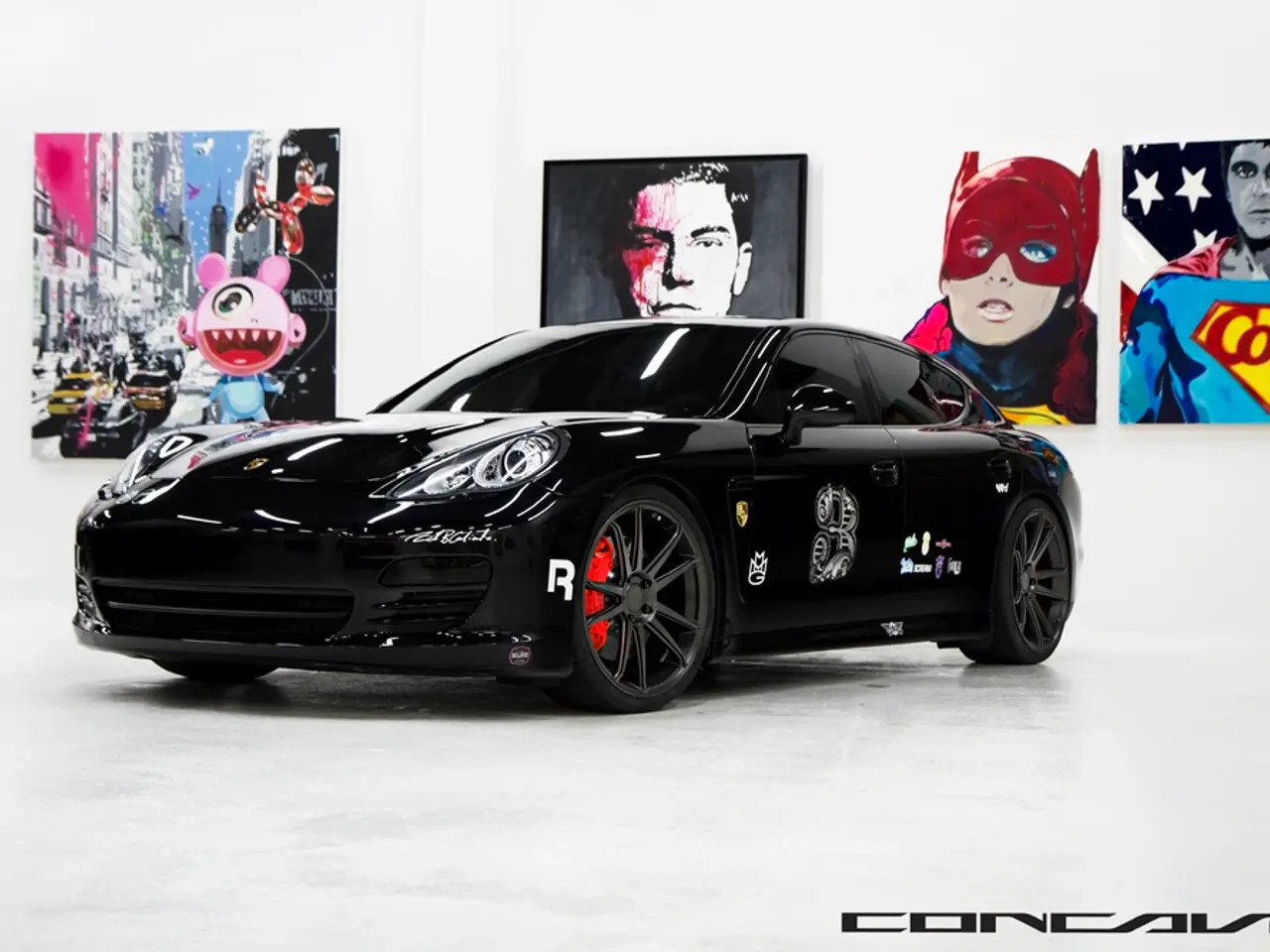
Forecast for the full year continues to decline following a dip in 1st-half earnings
Porsche, the renowned luxury car manufacturer, has announced a revised full-year outlook for 2025, with an operating profit margin expected to be between 5% and 7%. This downward revision comes in the face of multiple challenges, including increased costs due to US import tariffs, weaker global demand, and a slower transition to electric mobility.
US Import Tariffs and Global Demand
The new and existing tariffs, which have increased costs by 15% since August 1 and were initially imposed in June, have put pressure on Porsche's profitability. Despite attempts to mitigate this with price adjustments, these tariffs remain a significant headwind. The slump in China’s luxury car market, in particular, has led to lower sales volumes and revenues, impacting operating profit sharply.
Electric Mobility Transition
The slower uptake of electric models, which are strategic for Porsche’s future, affects revenue and margins. The transition to electric mobility is progressing more slowly than expected at Porsche, moving the company's 20% long-term return target further away.
Cost-Cutting Measures
To counter these challenges, Porsche's management is implementing a cost-reduction strategy. This includes the planned reduction of approximately 1,900 jobs by 2029, as well as the decision not to renew around 2,000 temporary contracts. Porsche also expects additional expenses of €1.3 billion for the strategic realignment in 2025, with €200 million for the first half of the year.
Financial Results
Financial results for the first half of the year show a 6.7% decline in revenue to €18.16 billion and a 67% plunge in operating profit to €1.01 billion. Despite these setbacks, Porsche maintains its revenue forecast of €37 billion to €38 billion for 2025, with the reduced margin outlook reflecting increased challenges and investments.
In 2024, Porsche made €5.6 billion in operating profit. However, the renewed downward revision of the earnings forecast is due to the 15% US import tariffs agreed between the EU and the Trump administration. The operating margin for Porsche in the first half of the year shrank from 15.7% to 5.5%.
Looking Ahead
Negotiations with the works council on additional extensive cost-cutting measures will begin in the current second half of the year. Porsche plans to offset the additional costs by raising prices in the US market by between 2.3% and 3.6%. Despite the current challenges, Porsche remains committed to its long-term growth strategy, with a focus on electric mobility and sustainable technologies.
[1] Reuters. (2025). Porsche lowers full-year outlook for profits. [online] Available at: https://www.reuters.com/business/autos-transportation/porsche-lowers-full-year-outlook-profits-2025-08-01/
[2] The Guardian. (2025). Porsche to cut 1,900 jobs as it grapples with electric car transition. [online] Available at: https://www.theguardian.com/business/2025/aug/01/porsche-to-cut-1900-jobs-as-it-grapples-with-electric-car-transition
[3] Financial Times. (2025). Porsche cuts jobs and raises prices in US amid cost-cutting drive. [online] Available at: https://www.ft.com/content/a3b095aa-252e-408a-b9df-8a5c2914b5a5
[4] Bloomberg. (2025). Porsche Sales in China Plummet as Luxury Tax Bites. [online] Available at: https://www.bloomberg.com/news/articles/2025-07-27/porsche-sales-in-china-plummet-as-luxury-tax-bites-on-luxury-cars
- The finance sector and Porsche's business are influenced by the 15% US import tariffs, causing pressure on the company's profitability and prompting price adjustments due to increased costs.
- Porsche's strategy to transition towards electric mobility faces challenges, as the slower uptake of electric models negatively impacts both revenue and margins, pushing the company's 20% long-term return target further away.






