
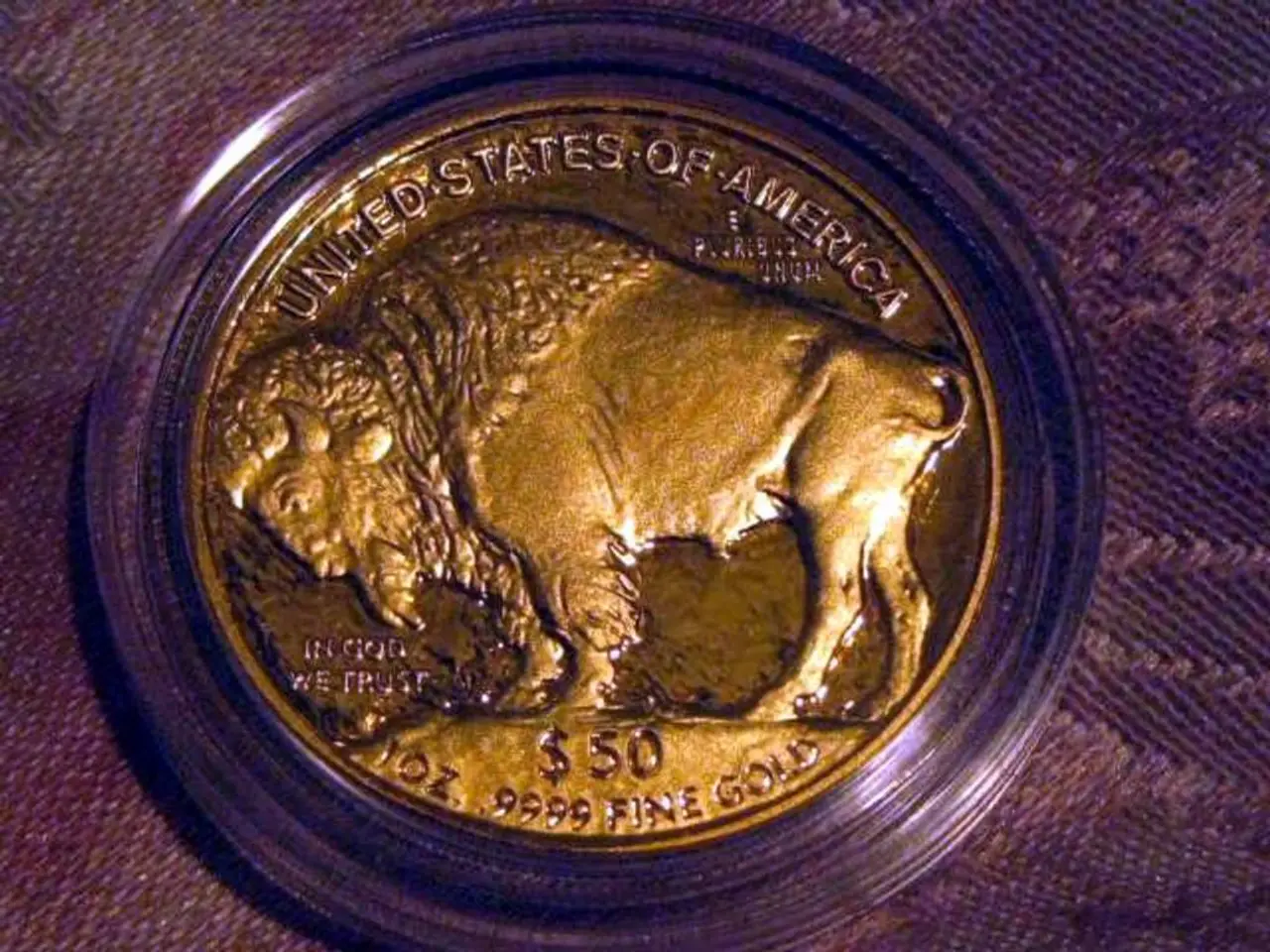
Escalating gold prices - Anticipated further cost hikes in the aviation sector
In recent years, the world has witnessed a significant rise in gold prices, with the current price per troy ounce hovering around $3,300. This surge can be attributed to a variety of factors, chief among them the consistent gold purchases by central banks, particularly China's People's Bank of China (PBoC).
Central banks, led by China, have been the primary drivers of the recent gold price increase. China's central bank has been buying gold for eight consecutive months in the first half of 2025, totaling around 19 tonnes and raising gold's share of its foreign exchange reserves from 5.5% to 6.7% during that period. This continuous accumulation by the PBoC has provided significant support to gold prices, which saw the strongest first-half performance in nine years, with prices rising 23% in USD terms.
The broader rise in gold prices has also been influenced by geopolitical risks and a weakening US dollar, which traditionally boost gold demand as a safe-haven asset. However, central bank buying slowed somewhat in the second quarter as prices approached record highs, making some buyers cautious. Nonetheless, surveys suggest central bank gold accumulation will continue, helping underpin demand and prices in the medium term.
China's influence is significant because it is both a large gold consumer and an active central bank buyer. With steady imports and heightened domestic investment demand via ETFs and futures trading, China diversifies its foreign reserves, reduces reliance on the US dollar, and hedges against global economic and geopolitical uncertainties—factors that contribute to the ongoing upward momentum in gold prices.
The Bundesbank, the second-largest gold reserve holder, reported a gold reserve value of 270 billion euros at the end of 2024, an increase of 69 billion euros from the previous year. However, unlike China, the Bundesbank has not made any new gold purchases but has slightly reduced its reserve. Germany's gold reserves are stored in various locations, with 1,236 tons housed in the Federal Reserve Bank in New York and another 405 tons guarded by the Bank of England in London.
The increase in the gold price has implications for jewelers worldwide and their customers. Despite a decrease in the number of marriages in Germany, sales have increased due to the higher cost of gold. This trend is expected to continue as gold prices continue to climb.
Experts predict that the price of gold could reach $4,000 by mid-2026, according to US investment bank Goldman Sachs. However, opinions vary on China's actual gold reserves, with some believing they are much higher than officially reported. Regardless, the influence of central banks, particularly China, on the gold market is undeniable.
In a statement, Michael Eubel, head of precious metals at BayernLB, said, "As long as central banks increase their gold reserves, the gold price will rise." This trend, driven by geopolitical tensions and the actions of central banks, particularly China, is likely to continue shaping the gold market in the foreseeable future.
References: 1. Goldman Sachs: Gold Price Could Reach $4,000 by Mid-2026 2. Central Bank Gold Buying Slows but Demand Remains 3. China's Gold Imports and Domestic Demand Drive Global Gold Market
Investment in gold has seen a rise due to the continuous gold buying by central banks, particularly China's People's Bank of China (PBoC), leading many experts to predict the price could reach $4,000 by mid-2026. This accumulation by the PBoC has provided significant support to gold prices as central banks, led by China, have been the primary drivers of the recent gold price increase.






