
Economic Role of Land: An Examination
Land, often considered a basic necessity, plays a crucial role in various industries beyond its traditional role as a home or a farm. In the realm of business, land is regarded as a long-term asset that provides economic benefits, encompassing not only physical space but also natural resources.
From an economist's perspective, land includes a wide array of resources such as minerals, wood, iron ore, petroleum, and natural gas. These resources are essential for productive activities in numerous sectors, serving as raw materials or energy sources.
Agriculture and Natural Resources
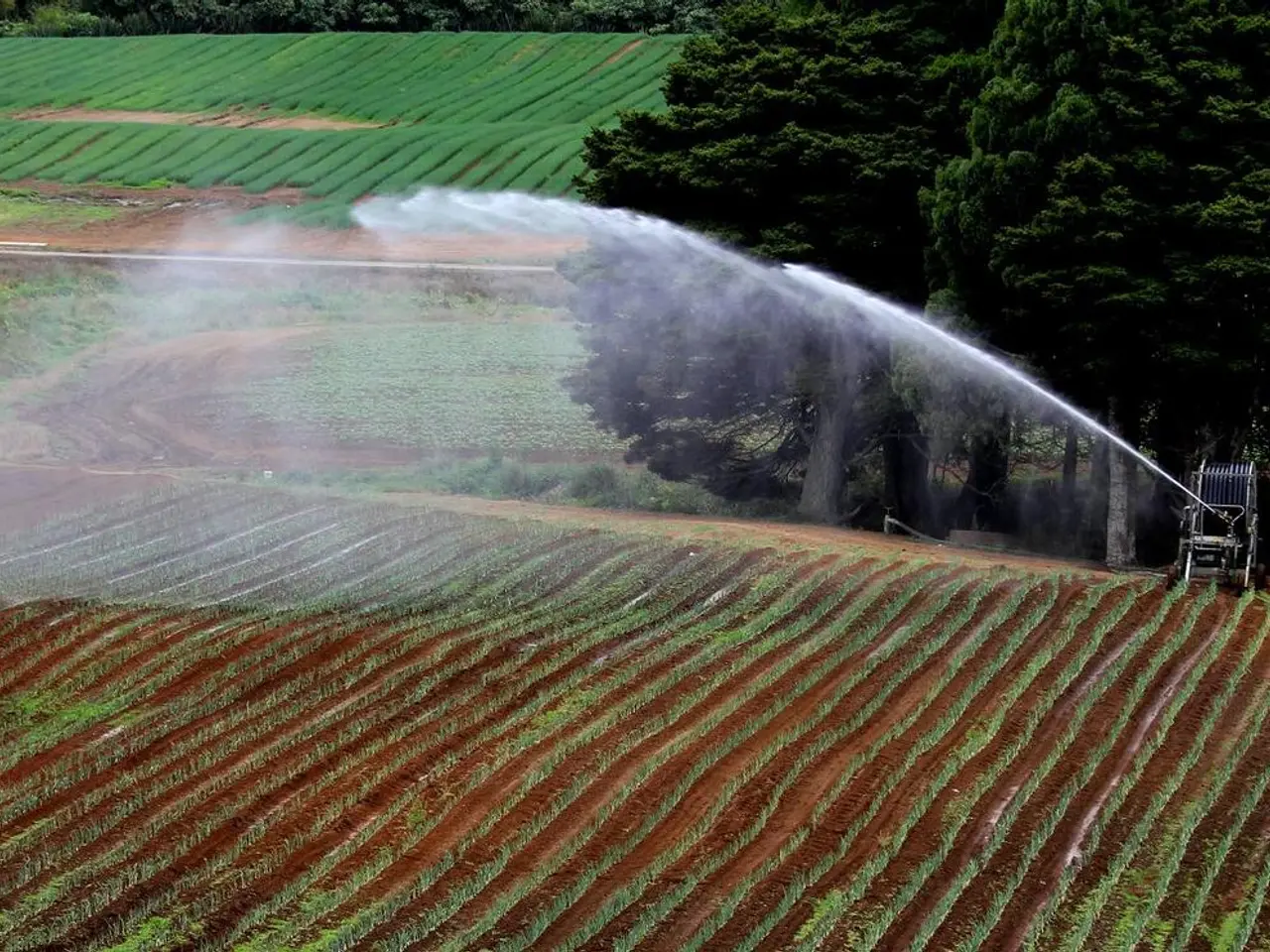
In agriculture, land is primarily used for cultivating crops, raising livestock, fisheries, and forestry. The fertility, size, and quality of the land significantly impact the output in this sector.
Manufacturing and Industrial Sectors
In manufacturing and industrial sectors, land provides the physical space for factories, warehouses, and related infrastructure like transportation, storage facilities, and testing tracks. For instance, vehicle production requires factory premises and test tracks.
Commercial and Service Industries
In commercial and service industries, land is used for office spaces, retail outlets, and facilities that support services. Although technology sectors depend less on physical land, they still require office locations and data centers.
Mining, Energy, and Resources
Natural resources derived from land, such as minerals, oil, water, and forests, are extracted and used in industries like mining, energy, construction, and raw materials supply.
Infrastructure and Public Utilities
Land also includes public infrastructure and utilities like transportation networks, public capital investments, which indirectly support production by enhancing access and distribution channels.
Technology and Limited Dependence on Land
In the technology sector, the emphasis on land use is less critical compared to capital and labor. However, office and data centers are still required.
Land as a Fixed Factor of Production
Land is considered a fixed factor of production in the short run because its quantity cannot be quickly changed, unlike labor and capital inputs.
In summary, the uses of land across industries include:
| Industry/Use Area | Role of Land as Factor of Production | |------------------------|----------------------------------------------------------| | Agriculture | Cultivation of crops, animal grazing, fisheries, forestry| | Manufacturing | Factory and plant space, storage, testing facilities | | Commercial/Services | Office space, retail locations, service centers | | Mining/Energy/Resources| Extraction of raw materials and natural resources | | Infrastructure/Public | Transportation, utilities, public capital investment | | Technology | Office and data centers (limited physical dependence) |
This variety stems from land encompassing both the natural resources available on it and the physical space it provides, integral to the production process in different industries.
It is important to note that the use of land varies depending on the business, with examples including manufacturing, logistics, retail, agribusiness, and service companies. Developing commercial property on purchased land carries risks, such as uncertainty in property demand, taxation, government restrictions, or natural disasters.
Companies may buy land to hold and resell at a later date, or for development purposes such as building commercial properties. The productivity of agricultural land can be increased through fertilization and drainage, but can also be reduced or destroyed due to human activities.
Lastly, natural resources fall into two categories: renewable and non-renewable. Renewable resources can be replenished, while non-renewable resources are available in fixed supply, making them increasingly rare and expensive in some locations, particularly in big cities.
- In the realm of environmental science, the health of land and its natural resources, such as forests, is crucial for the preservation of biodiversity and the maintenance of ecosystem services.
- Forward-thinking investors in the finance sector recognize the potential value in investing in the real-estate sector, particularly in urban areas, due to the increased demand for sustainable and eco-friendly buildings, as well as the development of green cities.
- The mining, energy, and resources industry can benefit from implementing sustainable practices in their extraction methods, such as minimizing waste and adopting cleaner technologies, to ensure the long-term availability of resources and reduce environmental impact.






