
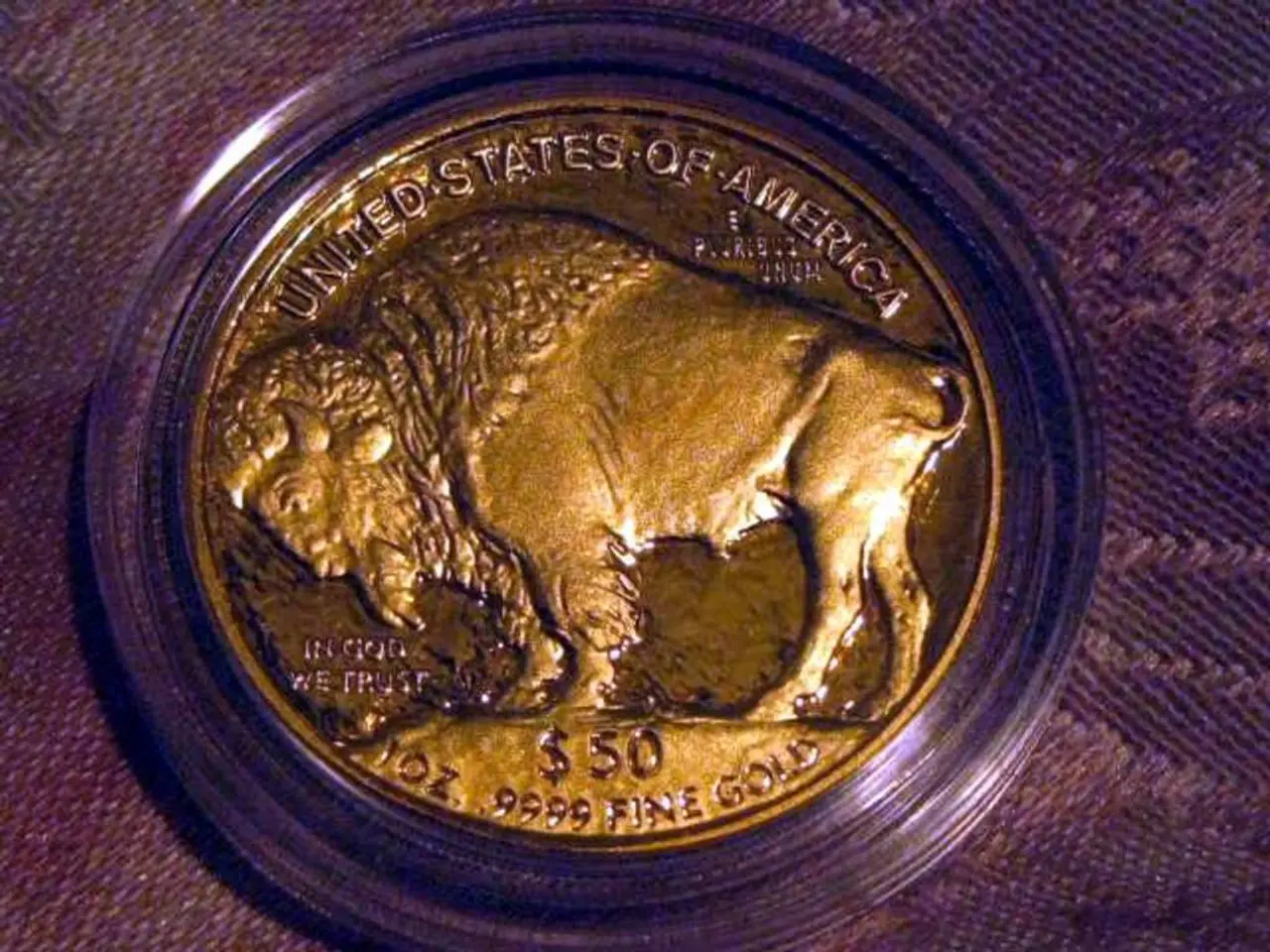
Dollar plunges close to four-year low minimum.
Thursday became another "black" day for the American dollar. Since 2021, the dollar has significantly weakened against the overall European currency and British pound – a record-breaking decline for the greenback in recent years. The primary reason behind this latest weakness "greenback" were massive sales of it by its traders to boost the likelihood that the Federal Reserve would lower the key interest rate not just once, but multiple times this year.
Eric Theorell, currency strategist at Scotiabank, stated to Reuters, "Of course, the focus this week was on the Federal Reserve - discussions centered around the prospect of early rate cuts, and whether it would happen more than once."
Jerome Powell, the head of the FRS, testified in Congress this week, with his remarks being comparatively more "dovish." He suggested that, apart from inflation fears associated with Trump's tariffs, the Federal Reserve would normally continue lowering interest rates. However, in the current situation, the FRS intends to stick to its initial policy, i.e., no changes to the interest rate until the summer, as it expects inflation.
President Trump has promised to announce the name of the individual who will replace Powell in May 2026 as early as September or October, much earlier than usual. This move can easily be interpreted as another attempt by the White House to intensify pressure on the head of the Federal Reserve, to force him into lowering the interest rate. Regardless, it's expected that the replacement for Powell will adopt a more "dovish" stance on monetary policy, unlike the current head of the American central bank, whom Trump labeled as "awful" on June 25. The President also claimed to have already shortlisted 3-4 candidates for the post of America’s chief banker.
"Of course, this erodes trust not only in the Fed and its independence but also serves as a reason for revising monetary policy predictions," commented Nick Ris from Monex Europe on the situation.
Last week, members of the FRS's Board of Governors Christopher Waller and Michelle Bowman stated that the FRS should consider lowering interest rates because inflation is slowing down. Moreover, the labor market situation in the United States is deteriorating. The situation has improved slightly, as the number of U.S. citizens seeking unemployment benefits dropped slightly last week. However, the number of repeat claims for unemployment benefits reached a maximum since November 2021.
The euro strengthened against the dollar by 0.39% yesterday, currently trading at 1.1744 dollars, the highest since September 2021. The British pound rose by 0.45% to 1.3764 dollars, reaching a peak since October 2021. The Swiss franc and the yen also strengthened against the dollar, reaching 1.25 dollars and 144.38 dollars per dollar, respectively.
Lower interest rates reduce the advantage of the dollar over the world's major currencies due to differences in interest rates. Keep in mind that concerns about Trump's tariffs could negatively affect the growth of the American economy.
July 9 is fast approaching, a day when the U.S. must implement the delayed tariffs on goods from those countries that have not yet reached an agreement with them by that date. The escalating uncertainty around American securities, fueled by investor fears of a bleak future for the American economy, leads to mass selling of American assets and a shift towards Europe and Japan.
- The strengthening European currency and British pound, along with the Japanese yen and Swiss franc, can be attributed to the anticipation of lower interest rates in the American banking-and-insurance sector, as a result of the Federal Reserve's potential multiple rate cuts, which would reduce the advantage of the dollar over these currencies.
- As the focus shifts towards the forthcoming replacements for Jerome Powell at the Federal Reserve, the finance industry speculates that the new appointee might adopt a more 'dovish' approach to monetary policy, which could potentially weaken the American dollar further in the industry-domain of banking-and-insurance.






