
Deep-sea mining exploration commences in Japan
In January 2026, Japan plans to embark on a groundbreaking deep-sea mining operation, targeting rare earth elements from a depth of 5,500 meters near Minamitori Island. This initiative, while aiming to boost Japan's rare earth supply security, has sparked significant environmental concerns.
The deep sea, rich in life and home to unique and poorly understood ecosystems, is being viewed as the final "clean" resource frontier due to the presence of seemingly limitless mineral deposits. However, the potential environmental impacts of deep-sea mining are far from clear.
Scientists from various countries, including Portugal, the UK, and Mexico, have called for bans or moratoriums on deep-sea mining, citing concerns over habitat disruption, biodiversity loss, toxic pollution, and the long-term resilience of deep-sea ecosystems.
One of the primary worries is the disruption of seabed habitats. Extracting mineral-rich sediments will disturb these unique ecosystems, potentially leading to the destruction of habitats for benthic creatures like sea cucumbers, crustaceans, and filter feeders that depend on undisturbed sediment.
Previous short-term deep-sea mining tests have shown drastic declines in local fish and shrimp populations, with minimal recovery even after a year. This suggests potential long-term or irreversible ecological harm. Moreover, mining generates sediment plumes that can spread toxic metals through the water column, posing a risk to higher trophic levels, including apex predators such as sharks and swordfish.
Furthermore, many deep-sea ecosystems remain unexplored and poorly understood, raising concerns that deep-sea mining may cause unforeseen damage to marine biodiversity with potentially centuries-long recovery times, if recovery is possible at all.
Japan's deep-sea mining operation, taking place within its own exclusive economic zone and avoiding oversight from the International Seabed Authority (ISA), could set a precedent encouraging other countries or companies to initiate deep-sea mining. This could magnify these environmental risks on a global scale.
A study by Australia's government science agency CSIRO showed that deep-sea mining can have severe environmental impacts, including a decrease in bottom-dwelling creatures like sea cucumbers and crustaceans. Canada-based The Metals Company is pushing for a license to mine polymetallic nodules in the Clarion-Clipperton Zone by 2026, potentially without international approval.
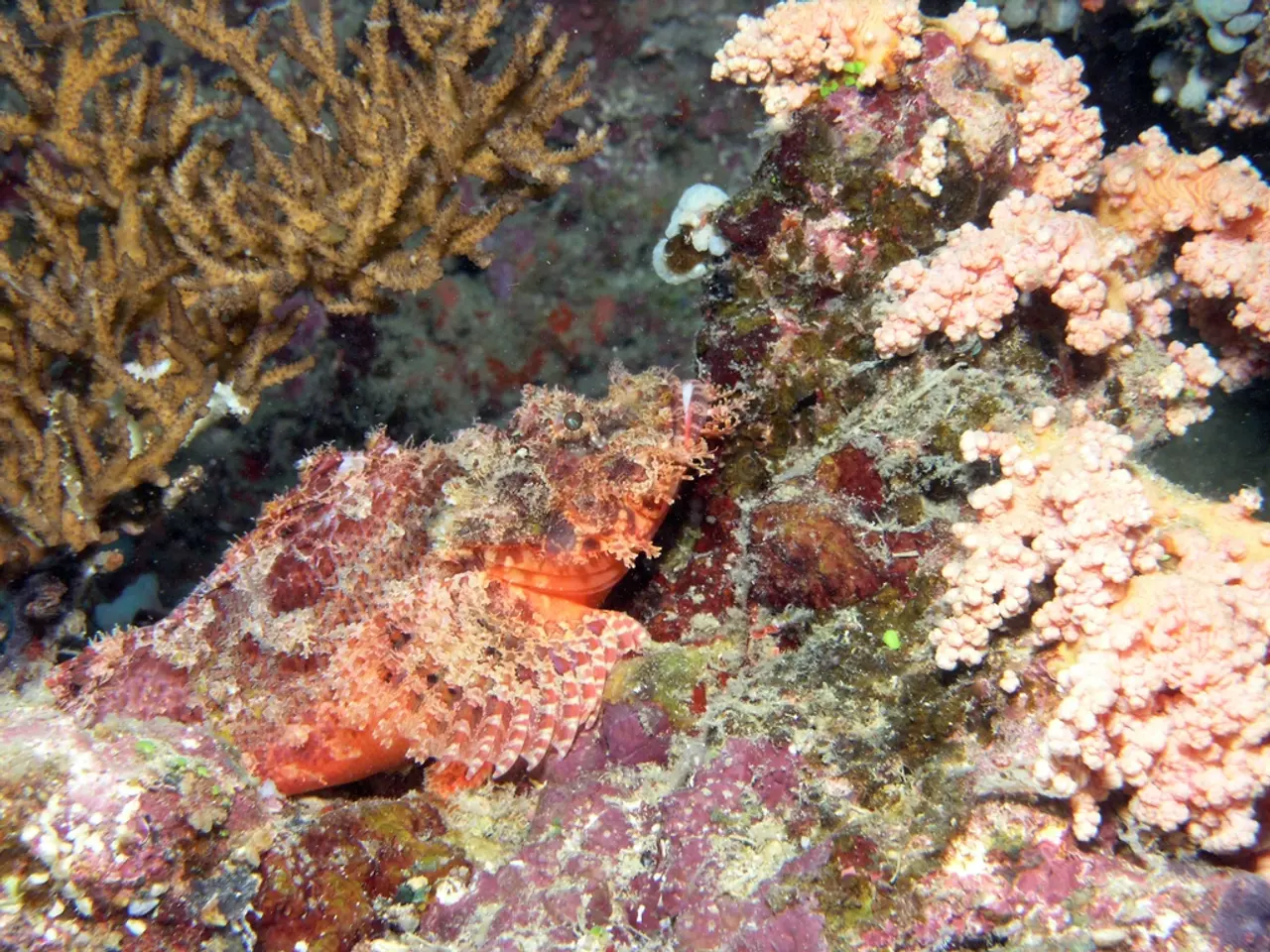
The deep sea is rich in life, including corals, brittle stars, worms, microbial mats, and delicate sponges. As we move forward with deep-sea mining, it is crucial to balance resource extraction with the need to protect and preserve these fragile ecosystems.
The mining process involves lowering a specialized robotic system to the ocean floor, which vacuums or scoops up sediment and separates the valuable rare earth elements from the waste. As we navigate this new frontier, it is essential to prioritise comprehensive environmental impact research and proceed with caution.
The 2026 deep-sea mining trial will be closely watched by various stakeholders, including oceanographers, ethicists, and climate activists. The future of deep-sea mining lies in finding a balance between economic growth and environmental preservation, ensuring that we do not compromise the health of our oceans for the sake of progress.
- The deep sea, containing diverse wildlife and fragile ecosystems, presents a valuable yet uncertain mineral frontier, raising questions about the potential environmental impacts of deep-sea mining.
- Researchers from multiple countries, such as Portugal, the UK, and Mexico, have urged for bans or moratoriums on deep-sea mining due to concerns over habitat disruption, biodiversity loss, toxic pollution, and long-term resilience of these ecosystems.
- Deep-sea mining operations, like Japan's planned 2026 initiative near Minamitori Island, could potentially lead to the destruction of habitats for benthic creatures and drastic declines in local fish and shrimp populations.
- Mining can generate sediment plumes that threaten higher trophic levels, such as apex predators including sharks and swordfish, with toxic metals dispersed throughout the water column.
- Unforeseen damage to marine biodiversity is a concern due to the unknown consequences of extracting minerals from deep-sea ecosystems, which still remain largely unexplored and under-researched.
- Deep-sea mining could set a global precedent, with other countries or companies potentially following suit and exacerbating environmental risks on a larger scale, avoiding international oversight, like the case of Canada-based The Metals Company.
- As we balance the need for technological advancement, such as the production of electric vehicles and renewable energy technologies that require rare earth elements, with environmental preservation, it's crucial to prioritize comprehensive research on the environmental impacts of deep-sea mining.
- Stakeholders such as oceanographers, ethicists, climate activists, and financial investors in the renewable energy and business industries will closely monitor the 2026 deep-sea mining trial, advocating for a future that considers both economic growth and environmental preservation.






