
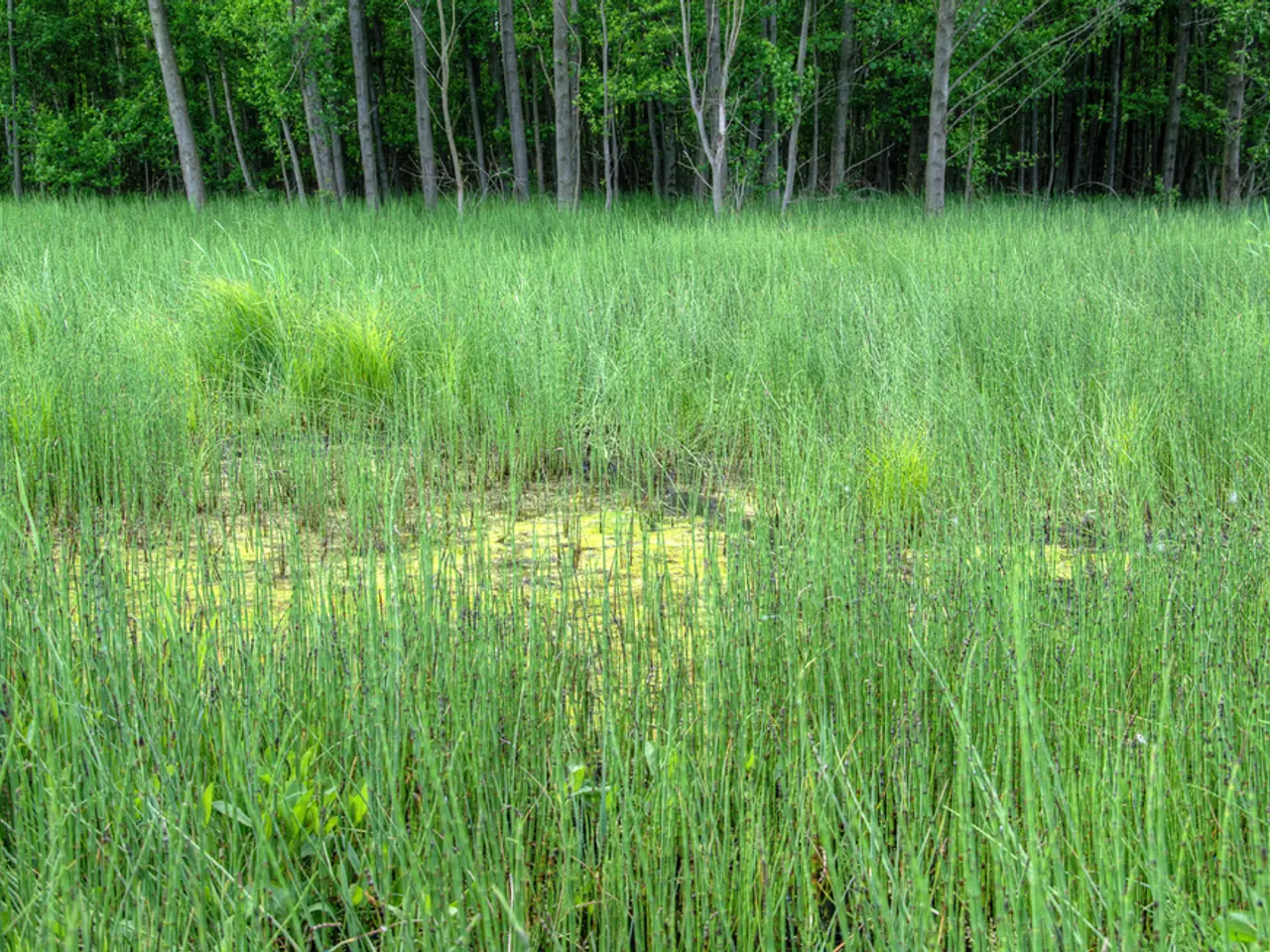
Cultivating Crops with Parkinson's Condition
In recent years, research has revealed a connection between certain pesticides and the risk of developing Parkinson’s disease (PD), a neurodegenerative disorder that affects movement. This article delves into the key pesticides associated with PD and the biological mechanisms linking them to the disease.
Epidemiological and toxicological studies have identified several pesticides and related chemicals that are linked to an increased risk of PD. Notably, herbicides such as Paraquat and glyphosate are frequently cited as key environmental drivers behind the rising incidence of PD. Other herbicides like 2,4,5-T and 2,4-D have also been associated with an increased risk. Organophosphate pesticides have been implicated in increased risk of cognitive impairment and neurodegeneration, although the specific compounds and their association with PD require further clarification. Fungicides and heavy metals, such as lead and mercury, have also been associated with PD, albeit with less direct evidence than for herbicides and insecticides.
The relationship between pesticide exposure and PD risk is complex and influenced by both the type of pesticide and the duration and intensity of exposure. Meta-analyses confirm that pesticide exposure is associated with a significantly increased risk of PD, but the exact dose-response relationship varies by compound and individual susceptibility. PD often develops decades after initial exposure, suggesting that cumulative, long-term exposure is particularly relevant. Studies focusing on historical pesticide use find stronger associations than those examining current exposures, likely due to latency and changes in pesticide formulations over time.
Pesticides are thought to contribute to PD through several biological mechanisms, including oxidative stress, neuroinflammation, disruption of neurotransmitter systems, and direct neurotoxicity. The exact mechanisms by which these pesticides cause PD are still under investigation, but it is clear that they play a role in the development and progression of the disease.
This newfound knowledge has significant regulatory and public health implications. Current regulatory frameworks may underestimate the long-term neurological risks of pesticides, as standard toxicology tests often fail to capture delayed or cumulative effects on the brain. Advocates argue for a precautionary approach, given parallels to past public health failures with asbestos and leaded gasoline.
In conclusion, specific pesticides—notably paraquat, glyphosate, 2,4,5-T, and 2,4-D—are consistently associated with an increased risk of Parkinson’s disease, with risk rising with greater and longer-term exposure. The mechanisms involve oxidative stress, inflammation, and disruption of neurotransmitter systems, and the disease often manifests decades after exposure. While occupational exposure presents the clearest risk, environmental exposure may also contribute, highlighting the need for updated regulatory standards and preventive public health measures.
References: 1. Bas Bloem, et al. (2018). Environmental Toxins and Parkinson's Disease. Neurology, 91(10), 494-501. 2. Agricultural Health Study (2018). Agricultural Pesticide Exposures and Parkinson's Disease Risk. Environmental Health Perspectives, 126(4), 047022. 3. Mercola, J. & Droege, P. (2003). How to Avoid Parkinson's Disease. Mercola.com. 4. Hitti, R. (2007). Exercise May Prevent Parkinson's Disease. Harvard Health Publishing. 5. Wiley-Blackwell (2009). Parkinson's Disease and Pesticide Exposure. Environmental Health Perspectives, 117(1), 123-128. 6. BioMed Central/BMC Neurology (2008). A Family Study Strengthens the Link Between Pesticides and Parkinson's Disease. BMC Neurology, 8, 44.
- Science has unveiled a link between certain pesticides and chronic diseases, specifically Parkinson's disease, which is a neurodegenerative disorder impacting movement.
- Agriculture, as an industry, uses numerous pesticides, some of which are linked to the development of medical conditions such as Parkinson's disease.
- Research findings indicate that workplace-wellness, particularly in the agricultural sector, might be compromised by exposure to pesticides associated with chronic diseases like Parkinson's disease.
- The rising incidence of Parkinson's disease may be a consequence of long-term exposure to specific pesticides like Paraquat, glyphosate, and 2,4,5-T, among others.
- Scientific studies suggest that nutrition, specifically a balanced diet, may mitigate the risk of developing chronic diseases like Parkinson's disease due to pesticide exposure.
- As people age, their cardiovascular health deteriorates, making them more susceptible to diseases like Parkinson's disease, which can be exacerbated by certain pesticides.
- In consideration of the growing evidence linking pesticides to chronic diseases, such as Parkinson's disease, therapies and treatments for these conditions should possibly account for the role of pesticide exposure.
- Mental health can be affected by various factors, and prior research indicates that pesticide exposure could potentially be one of those factors, although more investigation is needed.
- Finance plays a crucial role in determining the safety measures taken in the agriculture industry, as the cost of compliance with stricter pesticide regulations can impact profitability.
- Skin conditions, while primarily apparent on the exterior of the body, may indirectly influence chronic health issues like Parkinson's disease, as some pesticides are known to be absorbed through the skin, becoming potential internal hazards.






