
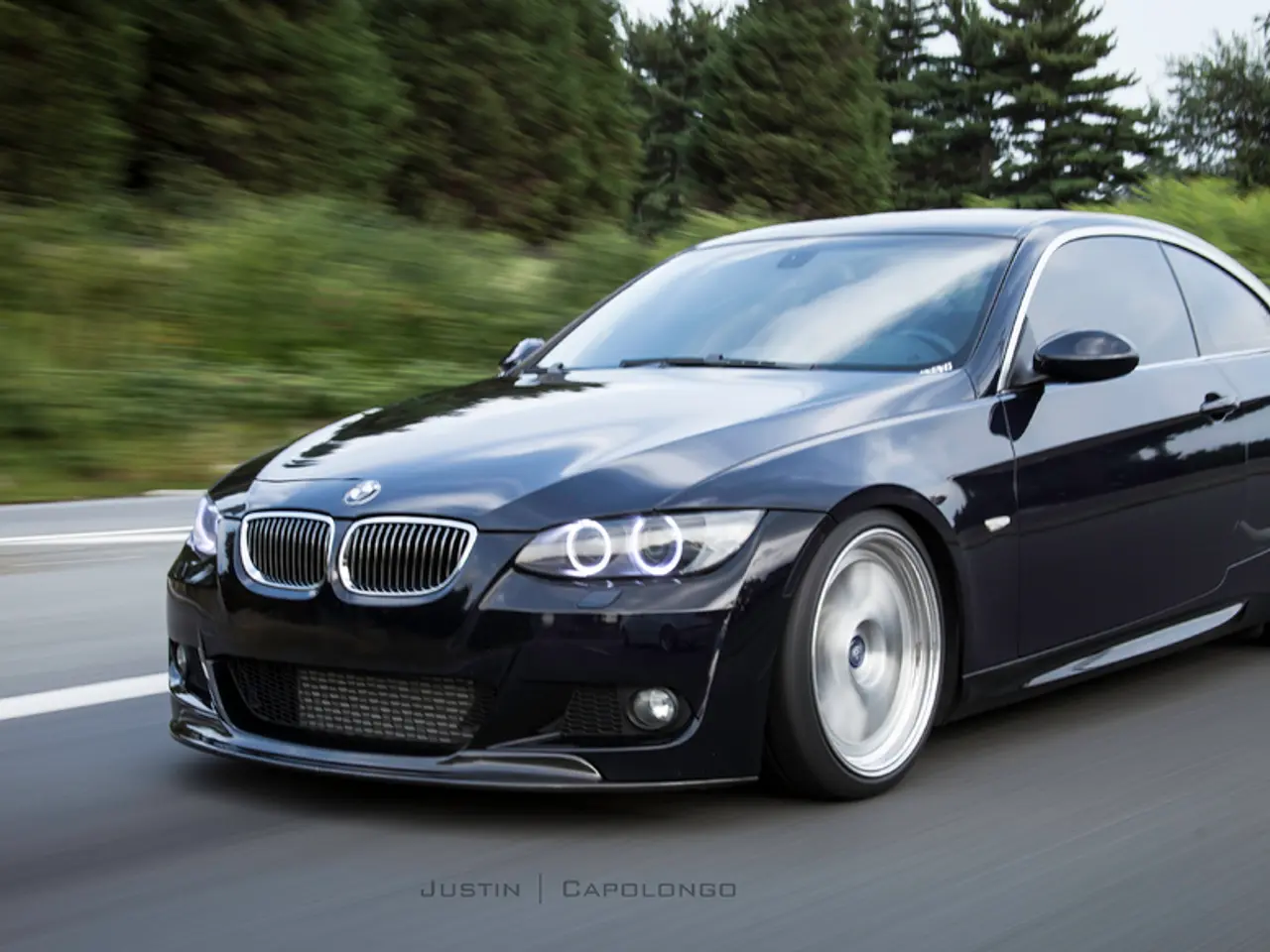
Collapse of BMW Profits - Impact of US Tariffs and Burden from China
In the first half of 2025, BMW experienced a significant profit decline, with after-tax profits amounting to 4.015 billion euros, a 29% decrease compared to the same period last year (5.656 billion euros).
The automaker's largest single market, China, reported a 15.5% drop in vehicle sales, leading to a significant decline in revenues in the Asia-Pacific region (down 11.1%). Weak consumer spending, aggressive market competition, and pricing pressures contributed to this decline.
In addition, BMW is facing increased costs due to tariffs imposed by the U.S. government on steel, aluminum, and electric vehicle imports from China. These tariffs are expected to reduce BMW’s automotive margin by about 1.25 percentage points in 2025, with the first half bearing a greater brunt of these costs.
Despite these challenges, BMW’s overall vehicle sales remained nearly stable globally, with increases in Europe (+8.2%) and North America (+3.4%) partly offsetting declines in China. The automotive EBIT margin was 6.2% for H1 2025, within BMW’s target range (5.0 to 7.0%), reflecting the continued fundamental strength of the business despite profit pressures.
Looking ahead, BMW reaffirmed its full-year 2025 outlook, expecting earnings before tax to be roughly the same as 2024 (€11 billion), maintaining an EBIT margin guidance of 5.0 to 7.0% for the automotive segment. The company cites its U.S. manufacturing footprint as a key buffer against tariff impacts and market uncertainties, and it continues to navigate the China market slowdown, aiming to recover momentum in other regions.
In the U.S., BMW warned that sustained tariffs could impact the economy in an environment of rising inflation. In China, BMW is dealing with difficult business conditions and high competition in lower price segments.
In Europe, BMW expects growth to be driven by electrified vehicle models, but did not provide an update on the growth prospects in China driven by electrified vehicle models.
In summary, BMW’s profit decline in early 2025 is largely due to China sales drop and tariff-related cost pressures, but the company expects to remain resilient with stable full-year profit despite these headwinds.
[1] BMW Group. (2025). BMW Group Interim Report Q2 2025. Retrieved from https://www.bmwgroup.com/en/investor-relations/financial-reports/quarterly-reports.html
[2] Reuters. (2025). BMW's profits fall 29% in first half on weak China sales, U.S. tariffs. Retrieved from https://www.reuters.com/business/autos-transportation/bmws-profits-fall-29-first-half-weak-china-sales-us-tariffs-2025-08-05/
[3] Automotive News Europe. (2025). BMW's H1 profit decline due to external factors, but company maintains full-year targets. Retrieved from https://europe.autonews.com/automakers/bmws-h1-profit-decline-due-external-factors-company-maintains-full-year-targets
[4] Financial Times. (2025). BMW warns of US tariffs hitting profits. Retrieved from https://www.ft.com/content/28875c2a-49b8-40f3-978a-3b6c42c06e95
[5] Bloomberg. (2025). BMW's China Sales Slump on Weak Consumer Spending, Pricing Pressure. Retrieved from https://www.bloomberg.com/news/articles/2025-08-05/bmw-s-china-sales-slump-on-weak-consumer-spending-pricing-pressure
- BMW's profit decline in the first half of 2025, attributed to weak consumer spending and increased costs in China, proves challenging for the automotive industry and finance sector as well, given the significant drop in vehicle sales in China.
- In an effort to remain resilient, BMW is expanding its focus on business segments unaffected by tariffs, such as Europe's growing market for electrified vehicle models, aiming to diversify its revenue streams within the transportation sector.
- Despite facing tariff-related cost pressures, BMW is positioning itself for continued success in the finance world by reaffirming its full-year outlook, targeting earnings before tax to be roughly the same as 2024, and maintaining an EBIT margin guidance of 5.0 to 7.0% for the automotive segment.






