
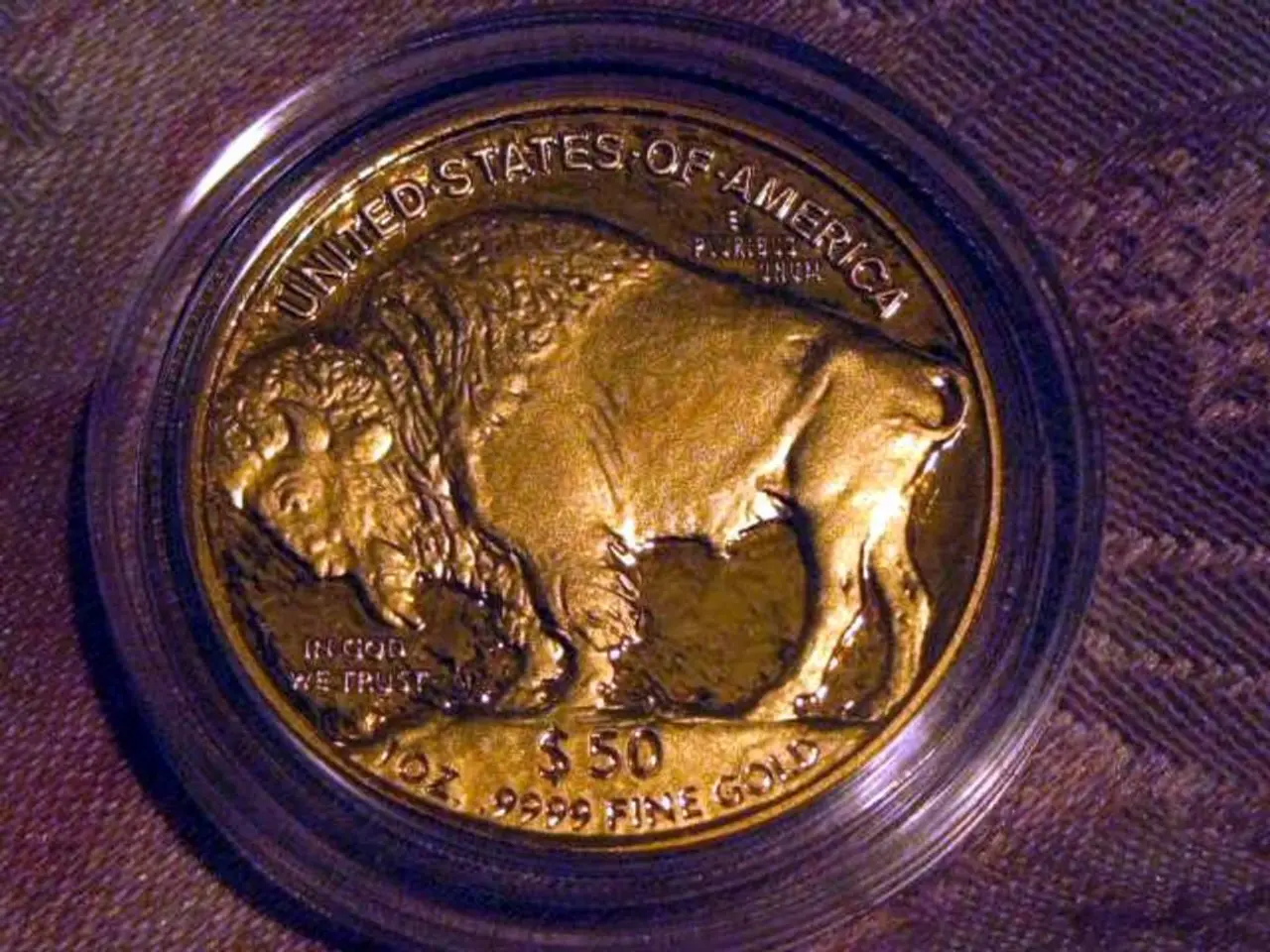
China's gold reserves exhibit a consistent increase throughout the year 2025
Central Banks Shift Towards Gold Amid Economic and Geopolitical Uncertainties
In a significant development, central banks around the world, including China, are increasingly accumulating gold as a response to persistent global risks. This trend, which reached record highs in 2023, signifies a strategic repositioning that challenges the dominance of the U.S. dollar and supports a rising role for gold as a global reserve asset.
The dollar remains the primary currency for transactions and as a reserve asset, but its dominance could wane due to increasing diversification. Central banks, including China, are seeking to reduce their reliance on the U.S. dollar, which faces challenges from high U.S. debt levels, persistent deficits, and political volatility.
China, in particular, prefers gold as a safer and more stable investment option compared to U.S. dollars or government bonds. The country's gold accumulation helps reduce the risk of tying its wealth to another country's economy and provides greater financial flexibility. China's shift towards gold may also be seen as a way to shield against potential political risks.
The trend of increased gold reserves by various nations may lead to a more multi-currency world, where gold regains a more significant role. Central banks, including China, are increasing their gold reserves primarily to diversify away from the U.S. dollar, hedge against geopolitical and economic risks, protect against inflation, and enhance national security through asset diversification.
The shift towards gold by China signals a change in the global order, as its economy is the second largest in the world. This move reflects growing concerns over the weakening dollar, global geopolitical uncertainties, and the desire to safeguard reserves in a historically stable and inflation-resistant asset like gold.
China's gold accumulation provides greater financial flexibility and reduces dependence on others. The country increased its gold reserves for the ninth consecutive month in July, although the exact figures for this month have not been disclosed. The accumulated gold by China since November 2022 exceeds 180 tonnes.
Gold serves as a reliable safe haven during times of market instability or inflation. Its role as a store of value amid global crises motivates countries like China and Russia to add gold to their reserves. The accumulation of gold helps countries reduce the risk of tying their wealth to another country's economy.
The implications for the global economy and U.S. dollar dominance include the erosion of U.S. dollar hegemony, increased gold prices, and financial system adjustments. As central banks diversify reserves into gold and other assets, the dollar's role as the dominant global reserve currency faces gradual weakening. Alternatives like the euro and renminbi remain limited contenders but have not displaced the dollar.
Sustained central bank buying amid geopolitical uncertainty and inflation pressures supports higher gold prices, reinforcing its status as a critical reserve asset. Continued diversification and the trend toward de-dollarization could prompt shifts in international trade, finance, and monetary policies globally.
In addition to China, central banks of India, Russia, Turkey, Brazil, and others have also increased their gold reserves. This trend underscores the strategic importance of gold in the global economy and the ongoing shift away from the U.S. dollar.
[1] Gold Demand Trends Q3 2023 (World Gold Council) [2] Central Bank Gold Reserves: Why They Matter (IMF) [3] Gold as a Safe Haven Asset (Bank of England) [4] The Future of the Dollar as the World's Reserve Currency (Peterson Institute for International Economics) [5] Gold Prices and Central Bank Buying (Kitco News)
Central banks, including China, are increasing their gold reserves primarily for financial diversification, hedging against geopolitical and economic risks, and enhancing national security through asset diversification. This trend, driven by the growing concerns over the weakening dollar and global uncertainties, may lead to a more multi-currency world, with gold regaining a significant role in the global economy.
The shift towards gold by China and other countries, like India, Russia, Turkey, Brazil, and others, represents a strategic repositioning that challenges the dominance of the U.S. dollar and supports a rising role for gold as a global reserve asset in business and finance.






