
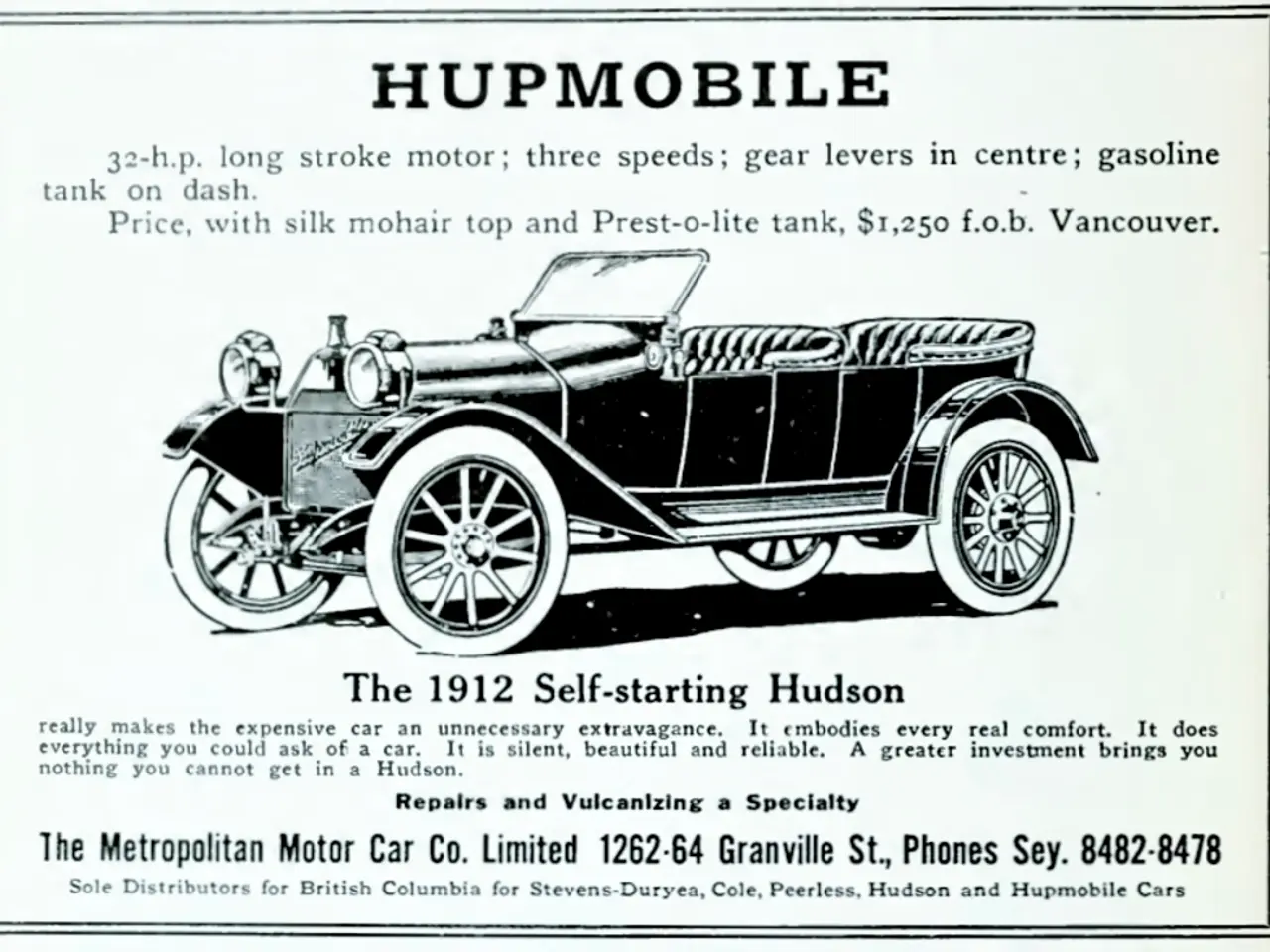
Car advertisements reportedly boost brand perception by three times, according to LeadStory.
In the rapidly evolving landscape of digital media, the in-car environment is emerging as one of the largest untapped frontiers, with over 100 million connected vehicles on the roads according to 4screen. This burgeoning market offers exciting opportunities for advertisers, who are increasingly focusing on immersive, interactive, and personalized experiences enabled by augmented reality (AR), virtual reality (VR), and artificial intelligence (AI).
Last week, driver interaction platform 4screen closed a $21 million Series B funding round, a strong vote of confidence in their vision and progress, as stated by Fabian Beste, co-founder and CEO of 4screen. The funding is intended to support 4screen's global expansion, aiming to provide brands with new opportunities for advertising within the automotive sector.
4screen's technology is already integrated across 15 global auto brands, including Mercedes-Benz, Stellantis, VW Group, Hyundai, Kia, Toyota, and Zeekr. Tesla, another major player in the industry, offers a range of entertainment options, albeit many of which are only available while the vehicle is parked. Mercedes-Benz, for instance, has partnered with Microsoft to bring Teams Meetings to its vehicles.
However, the rise of in-car advertising is not without its challenges. Concerns regarding data privacy and driver distraction are at the forefront. As in-car systems collect and utilize vast amounts of personal and behavioral data to serve targeted advertisements, ensuring user privacy and complying with data protection regulations has become critical. Moreover, because in-car advertising may compete for the driver's attention, there is a significant concern that it could lead to distracted driving, increasing safety risks on the road.
Brand Metrics and AI-powered news streaming platform LeadStory have released findings from a study examining the brand impact of in-car advertising. Alysha Dino, Brand Metrics' VP of global revenue, stated that this is the first time they've been able to connect the dots between campaign exposure in the car and real, measurable changes in how people feel about a brand. Ads promoting SAP Software Solutions appeared on drivers' screens within LeadStory's content and recorded brand uplift three times higher than Brand Metrics' global benchmark scores.
Jeep drivers have been complaining about pop-up ads showing up on their screens since 2023, describing them as annoying, intrusive, and unsafe. In-car screens are becoming more like smartphones and tablets, making it hard to argue that pop-up ads will dramatically affect drivers due to existing distractions.
Ford plans to introduce in-car ads and listen to drivers' conversations, serving ads based on location and speed. This move has raised fresh concerns about data privacy, particularly in a space where consumers may not expect it. Therefore, responsible design requires balancing marketing effectiveness with minimizing cognitive load on drivers and ensuring ads are contextually appropriate and safe to interact with while driving.
In sum, the field is moving toward richer content experiences supported by AI and immersive tech, while grappling with how to safeguard privacy and prevent driver distraction in these increasingly connected vehicles. The future of in-car advertising is an exciting and challenging frontier, with potential for innovative, personalized, and engaging experiences, as long as the concerns surrounding data privacy and driver distraction can be addressed responsibly.
[1] In-car advertising: How brands are leveraging the connected car [2] In-car advertising: The next frontier for brands [3] The future of in-car advertising: A look at the trends shaping the market [4] In-car advertising: Balancing privacy and engagement
- The burgeoning market of in-car advertising is drawing attention from the tech, automotive, and media industries, as advertisers seek to capitalize on the immersive, interactive, and personalized experiences enabled by AR, VR, and AI, particularly in connected vehicles.
- With over 100 million connected vehicles on the roads, the in-car environment presents a significant and largely untapped opportunity for brands looking to extend their reach and engage audiences in innovative ways.
- As in-car advertising becomes more prevalent and sophisticated, concerns about data privacy, driver distraction, and responsible design are driving discussions within the industry, as brands and technology companies navigate the challenges of implementing targeted advertising in a manner that respects user privacy and minimizes safety risks.
- Given the rising prevalence of in-car advertising and the increasing integration of smartphone-like features in vehicle interfaces, it is important for brands and advertisers to strike a balance between marketing effectiveness and minimizing distractions, ensuring that ads are contextually appropriate and safe to interact with while driving.
- From pop-up ads in Jeep vehicles to Ford's plans to serve ads based on location and speed, the evolution of in-car advertising is reshaping the landscape of the automotive industry, as brands explore new avenues for engagement while addressing the concerns surrounding privacy, distraction, and the overall user experience in this increasingly connected environment.






