
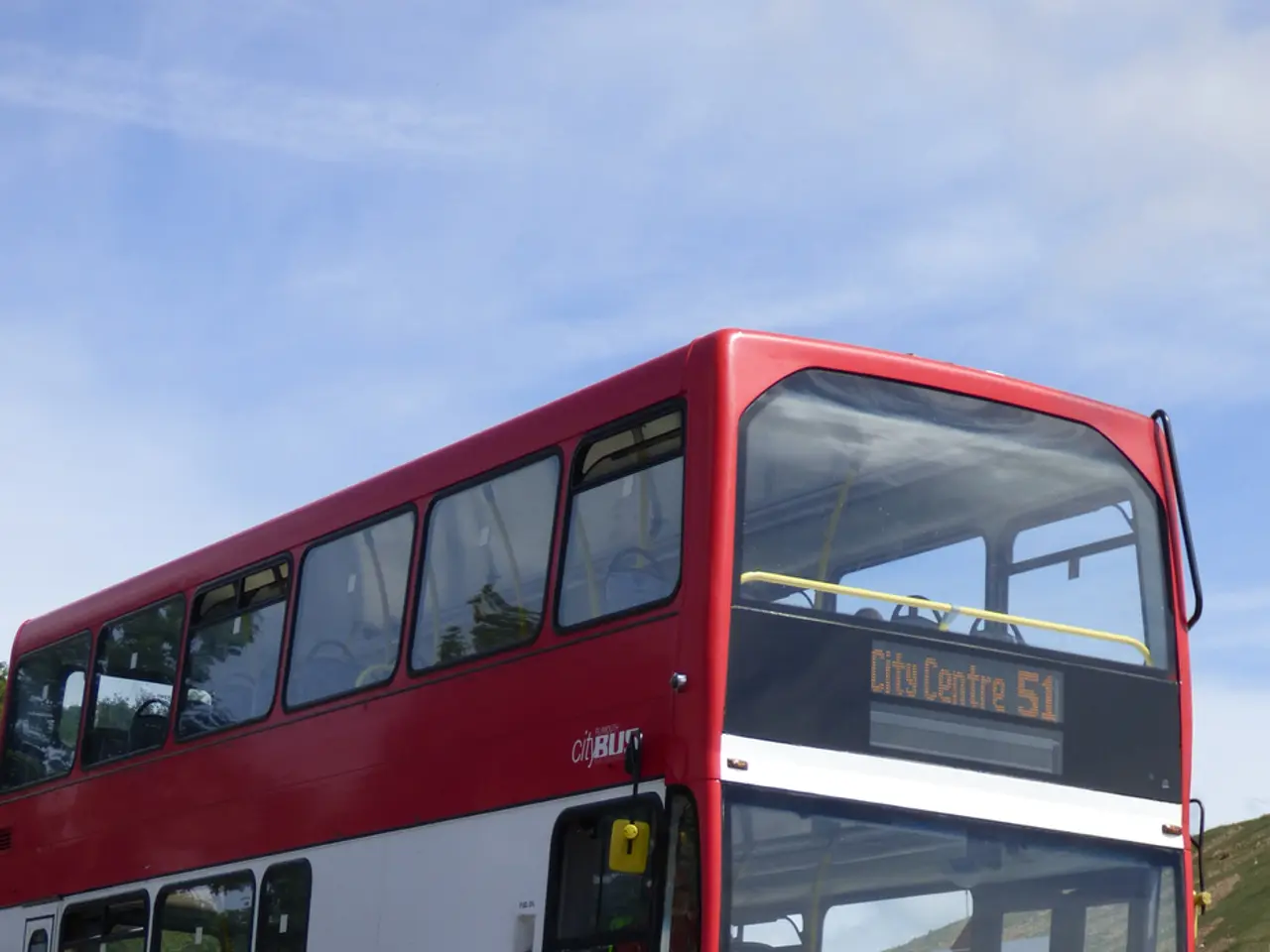
Avoid traffic congestion on Seattle's I-5 highway by opting for public transportation, authorities advise
Avoiding Traffic on Seattle's Northbound I-5 Ship Canal Bridge During Summer 2025 Roadwork
The summer of 2025 promises to bring significant changes to the commute of Seattle residents and travellers, as the northbound Interstate 5 (I-5) Ship Canal Bridge undergoes extensive repairs. To help commuters avoid or mitigate delays, alternative transportation options and strategies have been suggested.
For those driving, taking surface streets through neighbourhoods like Elliott Avenue West to 15th Avenue West, crossing the Ballard Bridge, can provide an alternative route. This route goes through Ballard and Crown Hill before reconnecting with northbound I-5 at Northgate. Another option for Eastside travellers, such as those from Kirkland and Bellevue, is to use State Route 520 (SR 520) and exit at Montlake Boulevard Northeast in the University District. However, these arterial routes may be slow during peak hours.
Seattle’s transportation department encourages using public transit, biking, scooter and bike shares, walking or rolling for shorter trips, and ridesharing or carpooling via RideshareOnline to minimize traffic and congestion around construction zones. WSDOT also provides real-time traffic maps and updates to inform travelers about closures and traffic conditions, allowing better trip planning.
Bicycles, pedestrians, and other rolling modes are intended to maintain access across the bridge even during closures, with detour signs and project updates provided. Residents and businesses near the affected areas have reported significant traffic impacts and longer wait times to enter onramps during peak travel periods, underscoring the value of using these alternative routes and options.
The roadwork on the northbound Interstate 5 Ship Canal Bridge is part of the "Revive I-5" initiative to extend the life of the bridge over multiple years, with intermittent lane restrictions and closures continuing through 2026 and 2027. Construction and closures for a necessary concrete repave will continue through mid-August.
Commuters are advised to pay attention to traffic conditions and updates on the department's website. The Commuter Hotline has taken a dozen calls over the first weekend of traffic and expects the volume to rise as closures continue throughout the summer. Commuters can plan out the most time-effective trip through Commute Seattle's new Commuter Hotline from August 1st to 15th, Monday through Friday, from 8 a.m. to 6 p.m.
Some commuters have shared their experiences of doubled travel times behind the wheel, while others have expressed relief at using public transit or biking. Trains offer a reliable alternative to road commuting, with an exclusive right of way, coming every eight minutes, and holding up to 1,200 passengers. Commuter transit use has helped keep traffic on the interstate "somewhat manageable", according to WSDOT spokesperson Tom Pearce.
Commuters can receive up to $25 in free fare at flipyourtrip.org. Henry Bendon, spokesperson for Sound Transit, encourages commuters to consider mass transit as an alternative to driving during construction. For those who prefer driving, park-and-ride facilities are filling up by 8:30 a.m., so commuters are advised to consider bus-to-train transit for late morning or afternoon commutes.
Alex Hudson, executive director of Commute Seattle, expects the volume of calls to the Commuter Hotline to rise as construction continues. Lizzy Canarie, a commuter from Seattle's Lake City neighbourhood to Eastlake, found her usual 15 to 20-minute commute took an hour on Monday. However, she plans to take the bus due to the traffic, estimating the ride to take 40 minutes to an hour. Tuesday's commute was better but still had heavy traffic on southbound I-5.
Zing Uttam, a commuter from the University District to Pioneer Square, was surprised by how nice it is to take the train. Tuesday's commute was better but still had heavy traffic on southbound I-5. The commute from Lynnwood to Seattle via I-5 took over 80 minutes on Monday morning.
In conclusion, the roadwork on the northbound Interstate 5 Ship Canal Bridge in Seattle has caused significant traffic delays. However, alternative transportation options and strategies have been suggested to help commuters avoid or mitigate these delays. By using public transit, biking, walking, or ridesharing, commuters can expect a more efficient and less congested journey.
- On the other hand, for individuals who prefer not to drive, public transit, such as trains, could be a reliable alternative, offering an exclusive right of way, frequent schedules, and the capacity to accommodate large numbers of passengers.
- In light of the extensive roadwork on the northbound I-5 Ship Canal Bridge, the rail industry could experience an influx of commuters opting for trains as a means to avoid the congestion on the roads.
- Considering the potential financial burden of increased fuel costs and longer commute times due to roadwork, the finance sector may also be impacted, as an increase in public transit use could lead to a decrease in automobile-related spending.






