
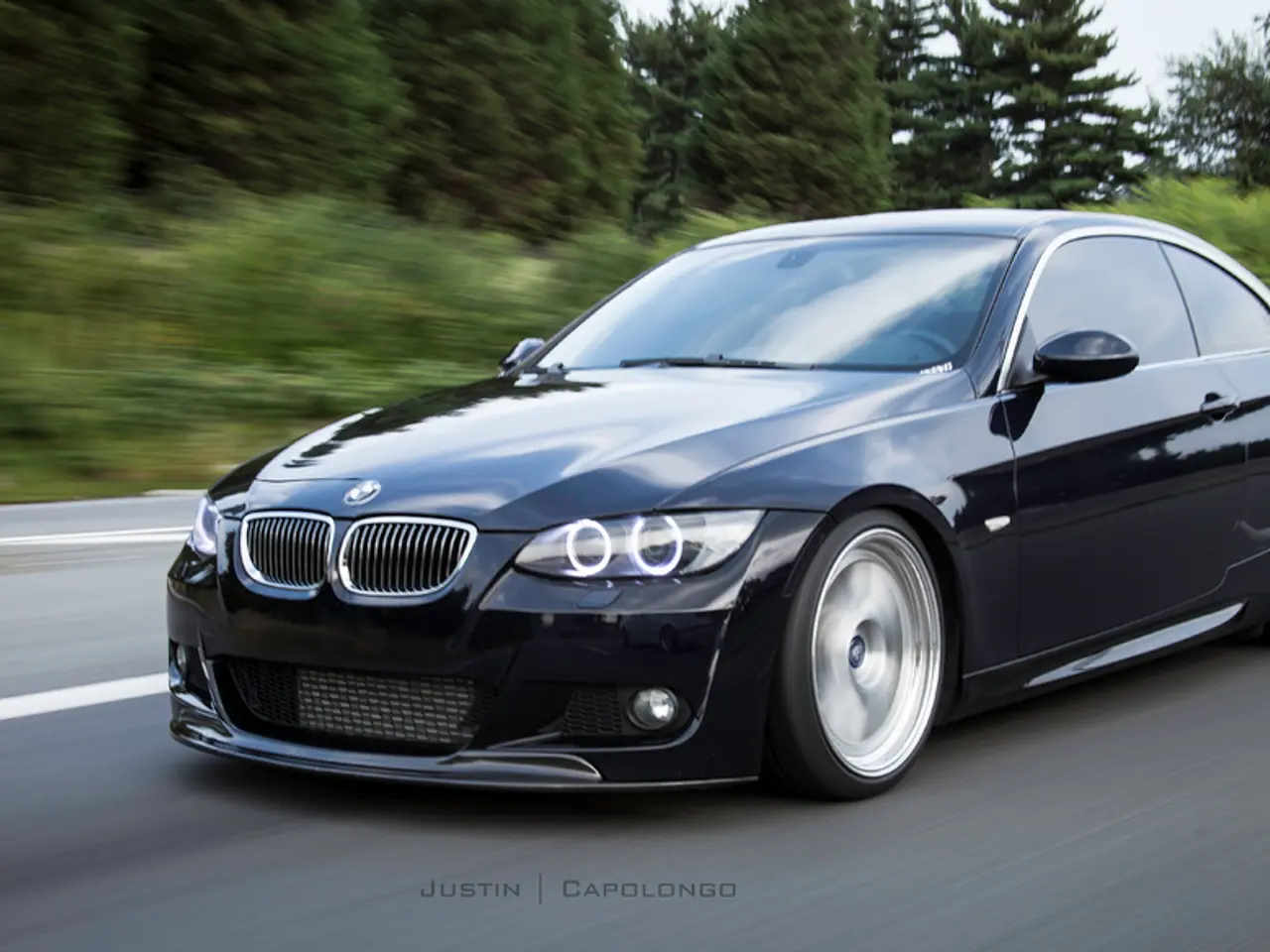
Auto industry braces as fresh trouble hits Volkswagen, BMW, and other major players: Could this germinate the ongoing turmoil?
German Auto Stocks Face Downturn Amidst Challenges in Europe and China
The European and Chinese markets are proving to be a challenge for German auto giants, including Volkswagen, BMW, and Mercedes-Benz. A combination of factors such as trade tariffs, economic slowdowns, and rising competition from domestic electric vehicle brands in China are causing a downturn in these markets.
Mercedes-Benz Struggles Amidst Sharp Profit Decline
One of the hardest-hit companies is Mercedes-Benz. The company's net profit has dropped sharply by 56% year-on-year in the first half of 2025, primarily due to a significant sales decline in China (nearly 20% drop year-on-year). The company is also facing negative impacts from US tariffs, which it predicts will reduce profits by €360 million in 2025.
The decline in sales has translated into a 10% drop in Mercedes-Benz's revenue in Q2 2025 compared to the previous year, and a 70% fall in net income, indicating deep pressure on profitability from weak sales and low margins.
BMW Feels the Pressure
BMW, while still undervalued with strong fundamentals, has also reported an 8.44% revenue decline and a 35.43% earnings decline in 2024, indicating broader sector challenges.
Market Uncertainties Affecting Sales
Market uncertainties affecting sales include tariffs, especially linked to US trade policies, and economic/regulatory uncertainties in Europe, which impact demand not only for cars but also for profitable van segments.
The competitive landscape in China is increasingly challenging for German luxury brands due to the rise of domestic electric vehicle manufacturers offering more affordable alternatives. This has led to weakened volumes and pricing power in that critical market.
Volkswagen's Electric Car Delay and Market Leadership
Volkswagen's more affordable electric cars are not expected to be launched until the end of 2025. Despite the decline in sales, Volkswagen maintained its market leadership with a share of almost 27%. BMW has a market share of just under 8%.
The new data has not yet had a significant impact on the stocks of Volkswagen Vz. (WKN: 766403). However, the downward spiral in the car market could continue for some time for Volkswagen Vz., as many negative news have already been priced in after several profit warnings for the company.
The decline in the car market was partly due to advance effects related to the expiration of electric vehicle subsidies in the previous year. Sales of gasoline and diesel vehicles fell significantly, by up to almost 24%. The European car market experienced a loss in momentum in September, with the number of new passenger car registrations decreasing by 6.1% year-on-year to 809,163 cars.
In summary, the downturn in the European and Chinese markets for German automakers is driven by the economic slowdown, increased trade tariffs, and fierce competition from local electric vehicle brands in China, which together result in falling sales volumes, squeezed margins, and lower profitability for Volkswagen, BMW, and especially Mercedes-Benz. The decline in sales figures is another blow to auto stocks, and the downward spiral in the car market could continue for some time.
Financial challenges are evident in the automotive sector, particularly for luxury brands such as Mercedes-Benz and BMW. Mercedes-Benz, for instance, has reported a dramatic 56% drop in net profit year-on-year, attributed largely to a significant decline in sales in China.
The finance aspect of the businesses, particularly for German auto giants, is severely affected due to escalating trade tariffs, economic slowdowns, and increased competition from domestic electric vehicle brands in China.






