
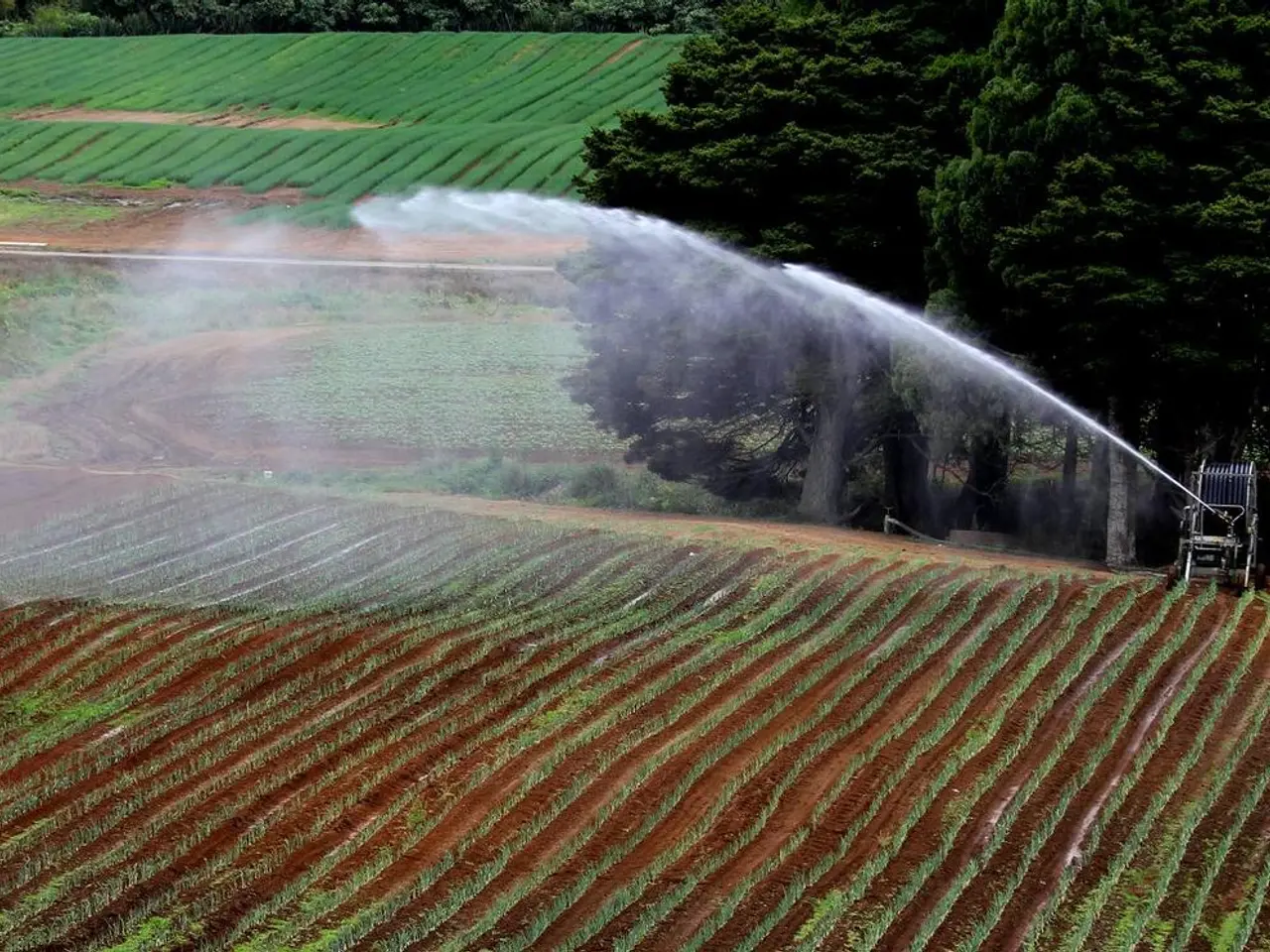
Agricultural sector experiences a boost as AGRA unveils strategic plan to expand the agro-processing industry.
Agra's Ambitious Plan for Ghana's Farmers
Get ready to witness a game-changer in Ghana's agriculture sector! The Alliance for a Green Revolution in Africa (AGRA) has rolled out a five-year strategy, determined to revolutionize Ghana's agriculture and food system. This strategy aims to create an optimal environment for small and medium-sized agro-businesses, bolstering their competitiveness in value addition and increasing the resilience of raw material supply chains.
Here's the scoop: AGRA's strategy targets key crops, including maize, rice, cassava, soybean, cowpea, groundnuts, and vegetables. The goal? A competitive agro-processing industry that boosts farmers' productivity and resilience while supporting their livelihoods. You guessed it – they're also emphasizing youth and women's inclusiveness in the agricultural transformation.
The new strategy includes various interventions designed to bridge the yawning gap between production and post-harvest management. By improving agro-processing, value addition, and marketing, the strategy aligns with Ghana's agricultural transformation goals and the requirements for keeping the momentum going strong.
A major focus of the strategy is growing a competitive agro-processing industry within Ghana. Juliette Lampoh-Agroh, country manager for Ghana-AGRA, advocates for a systematic transformation, ensuring that high-quality, safe, nutritious, affordable, and sustainably produced food is available to all Ghanaians. She pushes for a system promoting productive smallholders who are adequately integrated into value chains, receiving their fair share of value and being incentivized to adopt productivity-enhancing technologies. Lastly, she emphasizes the importance of placing agriculture at the heart of Ghana's economic transformation.
Venessa Adams, Vice President, Strategic Partnership & Chief of Party at Partnership for Inclusive Agricultural Innovation in Africa (PIATA) - AGRA, stresses the relevance of investing in agriculture, which fuels private sector growth. She highlights PIATA's commitment to growing Ghana's agricultural sector, a critical element of the economy, as their new strategy and pragmatic approach take shape.
By 2030, AGRA aims to support 1.2 million farmers in Ghana to transition from subsistence farming to market-oriented and diversified farming systems, contributing significantly to food security.
Let's not forget the government. Bryan Acheampong, Minister of Food and Agriculture, states, "The sector will greatly benefit from the efforts to link production and markets while integrating it with other sectors." He believes these endeavors will boost the initiatives the government has in place to tackle emerging issues like the after-effects of the pandemic and the climate crisis.
Augustine Collins Ntim, Deputy Minister of Local Government and Rural Development, praised AGRA for the initiative, pointing out its importance as Ghana seeks to leverage agriculture to revamp rural economies and development. He believes that when successfully implemented, the strategy will aid Ghana's self-food sufficiency efforts, emphasizing the need for collaboration among key stakeholders.
Since 2007, AGRA has invested $60 million to strengthen Ghana's core agricultural systems, with initiatives implemented alongside public and private partners benefiting two million smallholders.
In conclusion, AGRA's innovative interventions in Ghana aim to support smallholder farmers by enhancing access to climate-smart inputs, offering technical and entrepreneurial support, and encouraging youth engagement. These efforts are geared towards improving food security, driving economic transformation, and fostering sustainable agricultural growth through stronger agro-processing and value chains. This aligns with Ghana's national development goals, focusing on creating a productive economy with a thriving agricultural sector.
- AGRA's five-year strategy aims to revolutionize Ghana's agriculture sector, creating an optimal environment for business growth in agro-processing.
- The strategy emphasizes the importance of youth and women's participation in the agricultural transformation, targeting key crops such as maize, rice, cassava, and vegetables.
- To bridge the gap between production and post-harvest management, AGRA's strategy focuses on improving agro-processing, value addition, and marketing.
- The goal is to boost farmers' productivity and resilience, while supporting their livelihoods, and growing a competitive agro-processing industry within Ghana.
- Venessa Adams, from Partnership for Inclusive Agricultural Innovation in Africa (PIATA) - AGRA, stresses the need for investment in agriculture as a means to drive economic growth and development.
- By 2030, AGRA aims to support 1.2 million farmers in Ghana, transitioning them from subsistence farming to market-oriented and diversified farming systems, enhancing food security and sustainability.
- Collaboration among key stakeholders, including the government, is crucial for the successful implementation of AGRA's strategy, which aligns with Ghana's national development goals, focusing on creating a productive economy with a thriving agricultural sector that equally contributes to lifestyle, food-and-drink, and finance sectors.






