
Abu Dhabi's Darb Toll System Explained: Costs, Operating Hours, and Exemptions Granted
==================================================
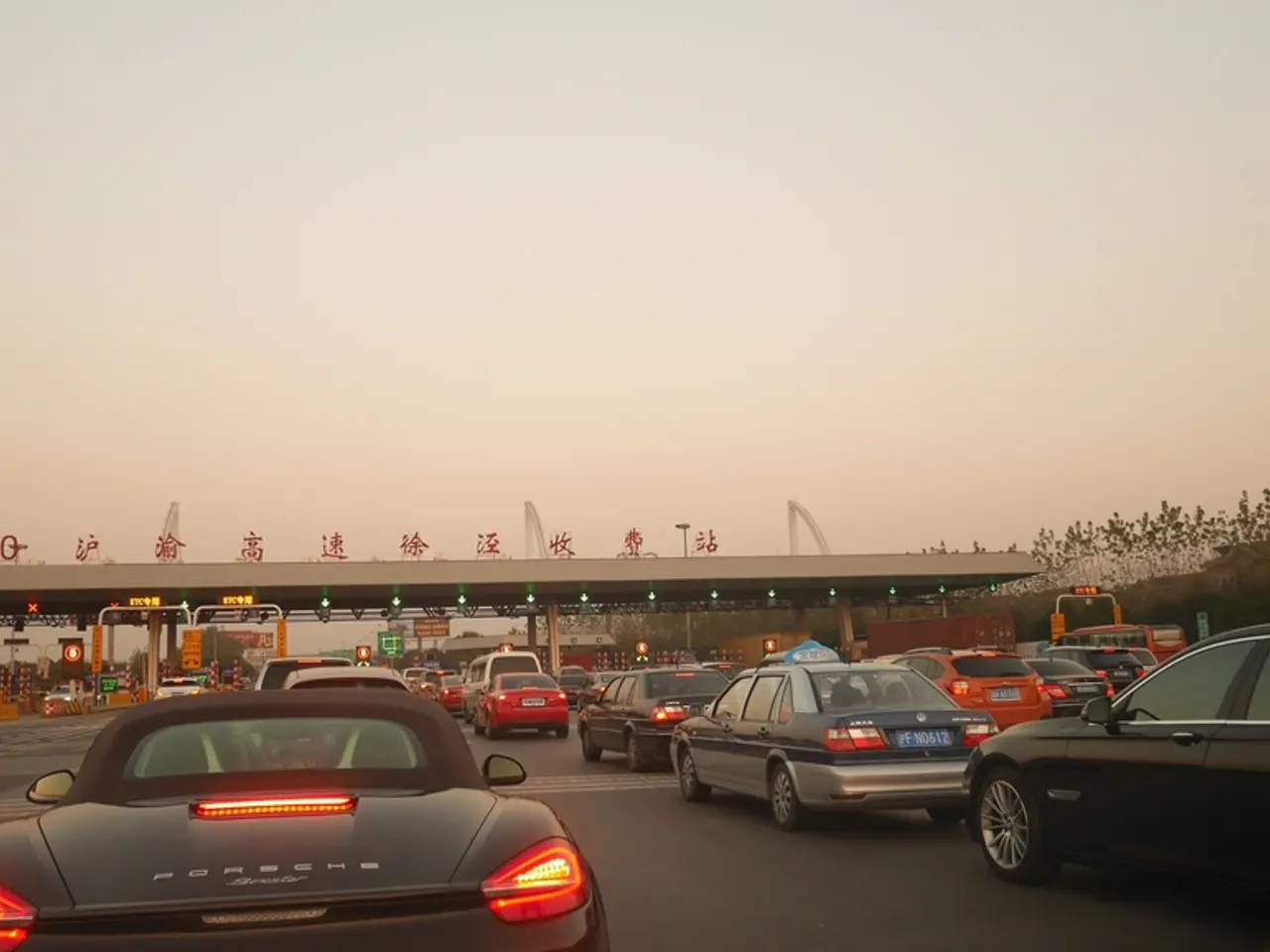
The Darb toll system, launched in 2021, is an innovative, no-tag, automatic toll collection system designed to reduce traffic congestion and promote public transport usage in Abu Dhabi [1][3]. The system operates by recognising vehicle plate numbers and automatically deducting toll fees from users' Darb accounts.
Located at strategic entry and exit points, the Darb toll gates can be found on four bridges leading into Abu Dhabi city: Sheikh Zayed Bridge, Sheikh Khalifa Bridge, Al Maqtaa Bridge, and Mussafah Bridge [3]. The system is managed by Q Mobility and applies when driving into Abu Dhabi island via these key bridges.
The Darb toll system operates during peak hours on Monday to Saturday, from 7:00 AM to 9:00 AM and 5:00 PM to 7:00 PM. During Ramadan, the timings shift to 8:00 AM to 10:00 AM and 2:00 PM to 4:00 PM [1][3].
To pay tolls, users must register and create a Darb account. Payment options include credit/debit cards, Darb kiosks, customer service centers, and online banking portals [3]. The system offers prepaid and postpaid payment plans, and motorists can manage accounts, check balances, and top up funds online or through the Darb mobile app [2][5].
Certain vehicles and users may be exempt from Darb fees, including emergency vehicles, buses, and others as defined by Abu Dhabi authorities. There is an application procedure to request exemption, and exemptions are aimed at supporting public transportation and essential services to encourage reduced private vehicle use [3].
For vehicles registered in Abu Dhabi, you can enable or disable auto-payment through the Darb system. The system applies daily and monthly caps to prevent high toll charges for frequent drivers. The daily cap is Dh16 per day per individual vehicle, and the monthly caps are as follows: First vehicle - Dh200, Second vehicle - Dh150, Third vehicle - Dh100 [1].
Toll fees only apply during peak hours on weekdays: morning peak (7am - 9am) and evening peak (5pm - 7pm), with a fee of Dh4 per crossing [1]. Motorcycles, trailers, and vehicles with official plates/logos from the armed forces, civil defence, and public transport buses, school buses, taxis authorised in Abu Dhabi, motorcycles, trailers, and passenger buses with 26+ capacity are automatically exempt from paying toll fees [1][4].
People of Determination, Senior Citizens (UAE nationals), Retired UAE Citizens, and Low-income UAE families must apply for an exemption through the Darb platform [1]. No charges apply on Sundays and public holidays as officially announced in the UAE [1].
For vehicles registered outside Abu Dhabi, fees are deducted from your Darb wallet automatically, provided the vehicle is registered on the platform [1]. You can reorder the listed vehicles in the system, but changes only apply from the following month [1]. Each exemption request must be approved and renewed as needed.
In conclusion, the Darb toll system is a convenient and efficient way to manage traffic flow in Abu Dhabi while promoting public transport usage. By registering and creating a Darb account, users can enjoy the benefits of a no-tag, automatic toll system, with multiple payment options and daily and monthly caps to prevent high toll charges.
The Darb toll system, a financial innovation in the transportation industry of Abu Dhabi, is intertwined with the finance sector as users can pay tolls using credit/debit cards, online banking portals, and through the Darb mobile app. Additionally, news about the system's exemption policies for certain vehicles and user groups, such as emergency vehicles, buses, and some UAE nationals, are consistently reported in industry updates.






