Nuclear power plant in France temporarily halted due to jellyfish intrusion
Jellyfish Blooms Pose Threat to Nuclear Power Plants
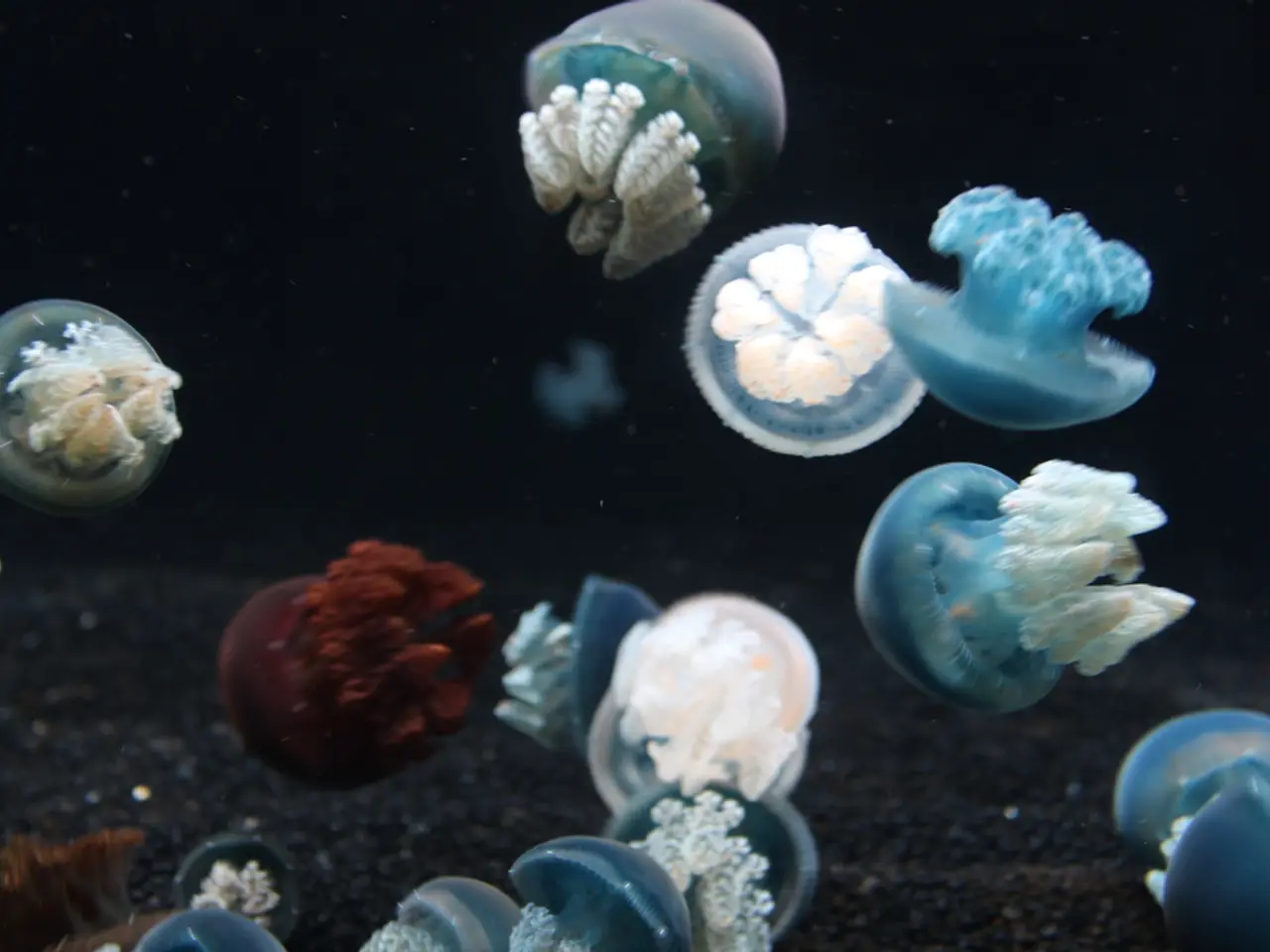
Jellyfish populations have been on the rise, thanks to changes in the marine environment caused by human activities and climate change. This increase has led to incidents where these aquatic creatures have disrupted the operations of nuclear power plants, as seen in the recent shutdown at France's Gravelines nuclear power plant.
Gravelines Nuclear Power Plant Shutdown
In August 2025, four units at the Gravelines nuclear power plant, Western Europe's largest, automatically shut down due to jellyfish clogging filter drums in the cooling water intake pipes. This was described as a "massive and unpredictable presence" of jellyfish.
The Gravelines plant, which has six reactors, each with a capacity to produce 900 megawatts, was expected to restart its units on Thursday. However, teams were conducting inspections to ensure the restart in complete safety.
Global Impact of Jellyfish Blooms
Such incidents are not uncommon. In 2013, jellyfish blooms forced the closure of the boiling-water reactor at the Oskarshamn Nuclear Power Plant in Sweden, the world’s largest of its kind. Similarly, an emergency shutdown was triggered by jellyfish blocking sea water intake pipes at the Torness Nuclear Power Plant in Scotland in 2021.
These jellyfish blooms, characterized by sudden and dense aggregations of jellyfish, often numbering in millions, can clog intake systems within minutes, interrupting cooling water flow and risking equipment damage.
Contributing Factors
Experts attribute the increase in jellyfish populations to factors such as overfishing, plastic pollution, and climate change. Rising global temperatures and marine ecosystem degradation favor jellyfish proliferation, while plastic debris near coastlines serves as breeding grounds for jellyfish, bringing them closer to intake pipes.
There is also hypothesized but not fully confirmed evidence that thermal discharges from nuclear plants may encourage local jellyfish blooms by altering planktonic ecosystems around the plants.
Operational Impact and Mitigation
Blockage of intake pipes interrupts cooling water flow, risking equipment damage and forcing reactor shutdowns that can last up to two days during jellyfish removal operations. Cleaning procedures are complicated and risk injury from jellyfish stings. While shutdowns are primarily a safety measure, they result in significant power generation losses and economic costs.
Ongoing research is focusing on understanding ecosystem dynamics to develop better prevention and mitigation strategies.
Despite the disruption, the Gravelines plant operator, EDF, stated that incidents involving jellyfish shutting down nuclear facilities are quite rare. The site was fully shut down after the incident, with its two other units already offline for maintenance. The operator also assured that the shutdown had no impact on the safety of the facilities, personnel, or the environment.
In summary, jellyfish blooms pose a significant and increasing threat to the operation of coastal nuclear power plants by clogging cooling water intake systems, with documented shutdowns in France, Scotland, Sweden, and other locations linked to environmental and anthropogenic factors. While these incidents are rare, they highlight the need for continued research and development of strategies to mitigate their impact.
[1] Environmental News Network [2] The Guardian [3] EDF Energy [4] World Nuclear Association [5] Science Daily
Read also:
- "Germany appears less environmentally friendly compared to Texas, according to Harald Lesch's climate documentary"
- Redefining Corporate Profitability: The Shift Towards Sustainable Prosperity
- Filthiest Automobiles Roam Through the Wendland Region
- Germany's Vehicles with Highest and Lowest Emissions Hit the Road