Economic Minister: Germany's pace of structure development is insufficient
The Port of Hamburg welcomed Federal Economics Minister Katharina Reiche (CDU) for a visit, as the city's maritime hub continues to expand and navigate through both growth and challenges.
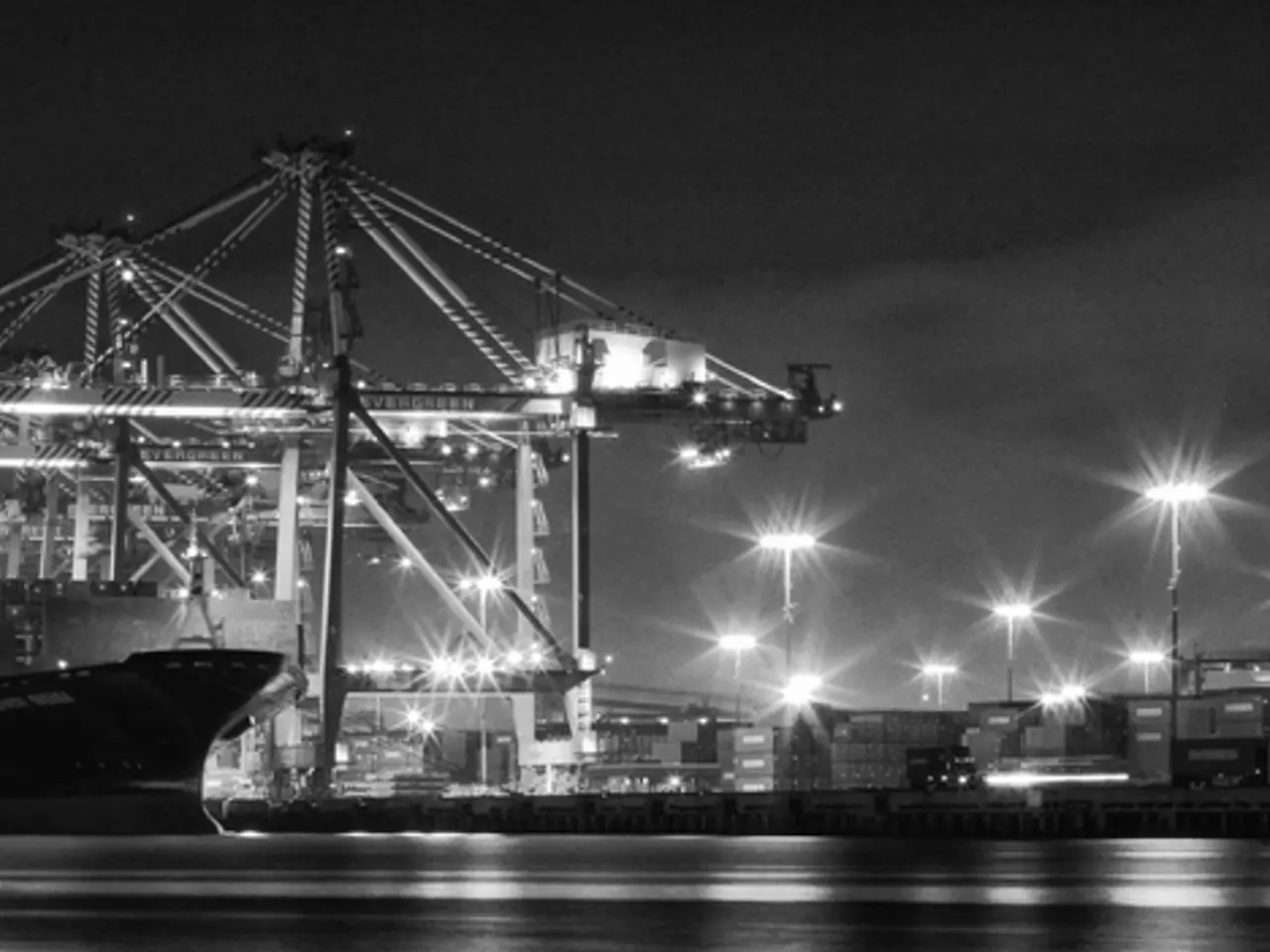
The terminal's container handling is largely automated, reflecting the Port's commitment to modernisation. In the first half of the year, the Port experienced a 9.3% increase in container handling, a promising sign of growth. However, it was noted that many of the increased containers were empty, indicating a potential imbalance in trade.
Imports from the US to the Port of Hamburg increased by 0.4%, but exports of loaded containers to the US decreased by a significant 26.2%. This trend, along with decreased exports from Germany to China, raises concerns about the country's trade performance across the Atlantic.
Minister Reiche expressed her concerns about the current situation, stating that it reflects a recession. She also criticised Germany's slow infrastructure development, urging northern states to utilise a €100 billion special fund for infrastructure expansion, as proposed by the federal government's maritime coordinator, Dr. Christoph Ploß, Member of the Bundestag and Coordinator of the Federal Government for Maritime Economy and Tourism.
In a positive note, Minister Reiche praised the dynamism at the Airbus site in Hamburg-Finkenwerder. The site, consistently digitising and automating, is a testament to the city's commitment to innovation and modernisation. However, she also expressed concern about the weakness of the location, calling for measures against high energy prices and burdens from social security systems.
The Altenwerder container terminal, Germany's most modern, continues to contribute to the Port's growth. Hamburg's Senator for Economics, Melanie Leonhard (SPD), expressed her confidence in the terminal's capabilities.
To support the "green transformation" of seaports, another €400 million from the federal government's climate and transformation fund will be allocated. This investment is expected to contribute to the Port's efforts to become more sustainable and environmentally friendly.
In conclusion, the Port of Hamburg continues to grow and adapt, facing both opportunities and challenges. With the support of the federal government and local initiatives, the city aims to maintain its position as a leading maritime hub.
Read also:
- Planned construction of enclosures within Görlitzer Park faces delays
- Foreign financial aid for German citizens residing abroad persists
- Hulk Hogan's successful transformation of his wrestling persona into a lucrative business entity
- United States and Russia prepared to delve deeper into negotiations regarding the Sakhalin 1 oil and gas project